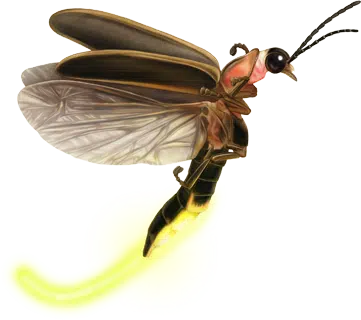
Observation: Photuris versicolor
Primary Observer:
Michelle Wilcox
Event Date:
2025-06-06
Status:
Unverified
Survey
Site Name:
Undisclosed
Province/State:
South Carolina
Event Date:
2025-06-06
Time of Day:
Night-Time
Start Time:
20:40
End Time:
23:00
Number of Observers:
7
Primary Observer:
Michelle Wilcox
Additional Observers:
Brad O'Brien, Todd Johnson, Brad Watkin, Keith Sutton, Ruby Sutton, Thomas Clawson
target_species_genus:
photuris
target_species_species:
forresti
Location and Habitat
Location Accuracy (meters):
0-25
Habitat Type:
Open Freshwater Wetland - Wetland Bog, fen, freshwater marsh
Habitat Type Notes:
Beaver Pond with pines, bays, oaks. See details from previous visit on 5/29/25.
Elevation (meters):
72
Area Searched (hectares):
0.4
Artificial Light Sources
Vehicles: No
Street Lights: No
Buildings: Yes
Columbia city glow in distance
Artificial Light Types
Sky Glow (diffuse illumination in the sky): Yes
Light Trespass (light cast on surfaces beyond its intended target): No
Glare (bright light causing visual discomfort): No
Artificial Light Notes:
Columbia city glow in distance
Observation
Observation Type:
With Flash Data
Number Observed:
1
genus:
photuris
Species:
versicolor
Observation Notes:
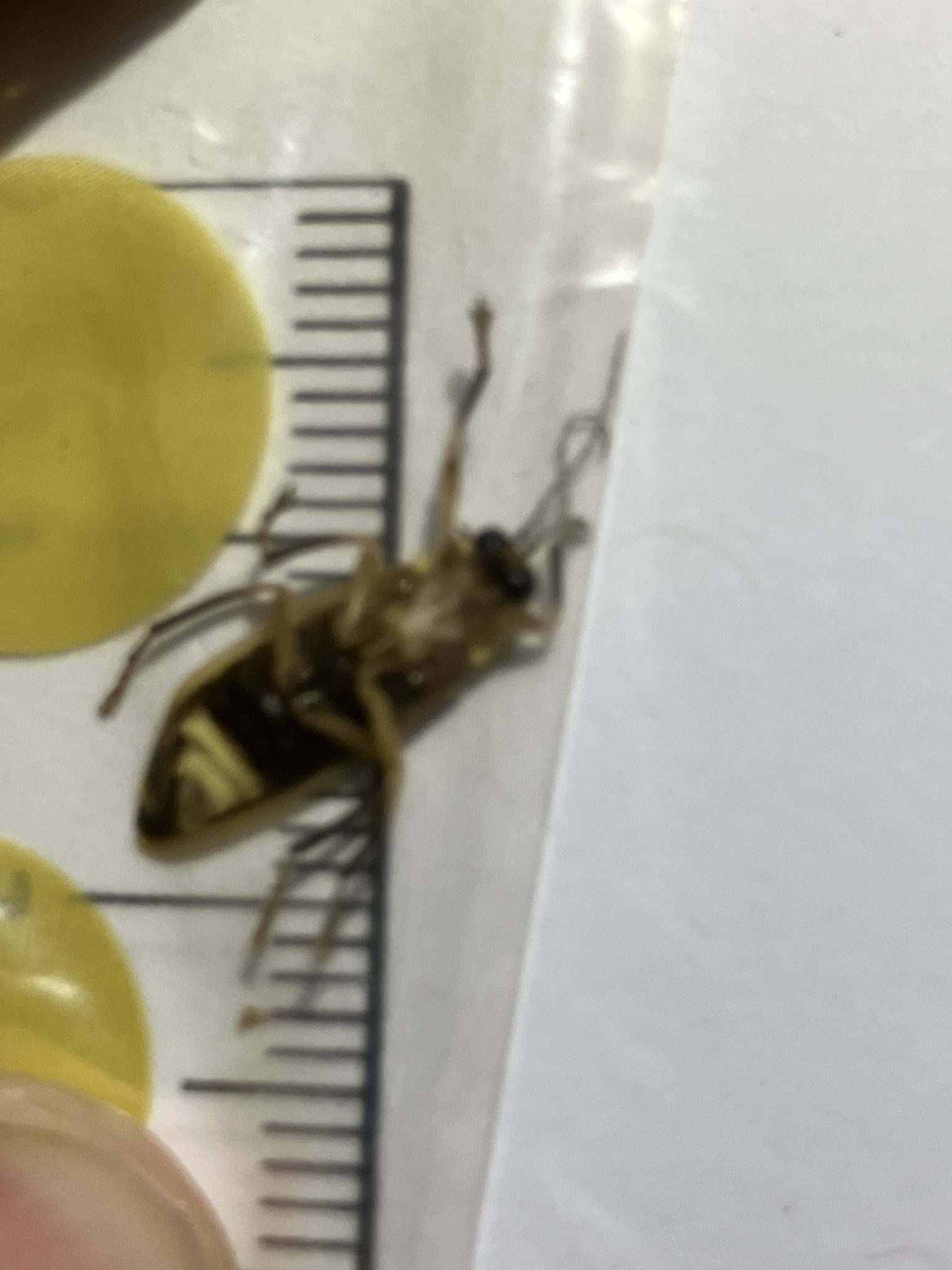
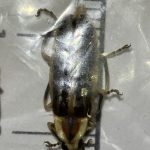
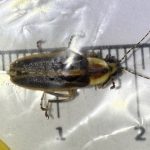
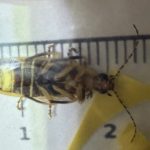
I didn't document approximate number of this species observed and I didn't document last time observed flash. 14mm female. I wanted to call this July Comets (Photuris lucicrescens) because the legs were very pale close to the body and it has elytra stripes, but maybe not the whole length of the insect. Also, I saw a 'comet firefly' nearby, maybe a male. But arrow on pronotum, short elytra stripe and fact that Photuris are hard to ID to species made me doubtful. Dorsal photo is poor, but 5th segment doesn't seem to have pale edge like is should for either P. lucicrescens or P. versicolor?
Specimen Voucher Number:
Flash Behavior
First Flash Time:
22:00
Last Flash Time:
23:00
First Flash Temp (F):
80
Last Flash Temp (F):
79
Flashes in Pattern:
4
Flash Color:
Green
Flash Pattern Period:
60
Flash Duration:
0.1
Flash Interval:
0.1
Male Height Zone:
Moderate (3-8 ft)
Flash Location:
No notes on location. Male height zone was a guess, since this was a female.
Male Flash Behavior:
?
Female Flash Behavior:
Long delay, minutes between flashes.
Status Changes
| DATE | USER | STATUS |
|---|---|---|
| 2025-09-05 16:25:35 | Michelle Wilcox | ->unreviewed |
| 2025-12-12 02:00:22 | Richard Joyce | unreviewed->unverified |
1 thought on “Observation: Photuris versicolor”
Leave a Comment
You must be logged in to post a comment.



Nice job getting photos! This is certainly in the Photuris versicolor group or complex, but it is hard to make a very certain ID without male flash pattern details. The dark-colored hind coxae (this diagram shows which segments are the coxae: https://www.fireflyatlas.org/wp-content/uploads/2022/10/Ventral-Anatomy_Photuris-1-edited.jpg) probably rule out Photuris lucicrescens and Photuris hebes, as these tend to have pale hind coxae. Based on the size and dark hind coxae both Photuris versicolor and Photuris quadrifulgens seem like possible options.