Observation: Photinus
Primary Observer:
Laurie Angus
Event Date:
2025-07-09
Status:
Unverified


Survey
Site Name:
Undisclosed
Province/State:
New York
Event Date:
2025-07-09
Time of Day:
Night-Time
Start Time:
20:40
End Time:
20:55
Number of Observers:
1
Primary Observer:
Laurie Angus
Additional Observers:
N/A
target_species_genus:
photinus
target_species_species:
pyralis
Location and Habitat
Location Accuracy (meters):
0-25
Habitat Type:
Woodland/Forest - Trees dominant, and in the over-story
Habitat Type Notes:
Habitat transition--small backyard grassy area borders dense bushes and woods--small creek runs through wooded area
Elevation (meters):
60.96
Area Searched (hectares):
.20234
Artificial Light Sources
Vehicles: No
Street Lights: No
Buildings: No
Street Lights: No
Buildings: No
Artificial Light Types
Sky Glow (diffuse illumination in the sky): Yes
Light Trespass (light cast on surfaces beyond its intended target): No
Glare (bright light causing visual discomfort): No
Light Trespass (light cast on surfaces beyond its intended target): No
Glare (bright light causing visual discomfort): No
Artificial Light Notes:
 
Observation
Observation Type:
With Flash Data
Number Observed:
50+
genus:
photinus
Species:
unknown
Observation Notes:
 
Specimen Voucher Number:
Flash Behavior
First Flash Time:
20:40
Last Flash Time:
20:55
First Flash Temp (F):
75
Last Flash Temp (F):
75
Flashes in Pattern:
1
Flash Color:
Yellow
Flash Pattern Period:
6-7
Flash Duration:
brief--less than a second
Flash Interval:
5-6
Male Height Zone:
Low (0-3 ft), Moderate (3-8 ft), High (over 8 ft)
Flash Location:
grass, bushes, trees--from approx. 1 foot above ground to almost tops of trees
Male Flash Behavior:
 
Female Flash Behavior:
 
1 thought on “Observation: Photinus”
Leave a Comment
You must be logged in to post a comment.


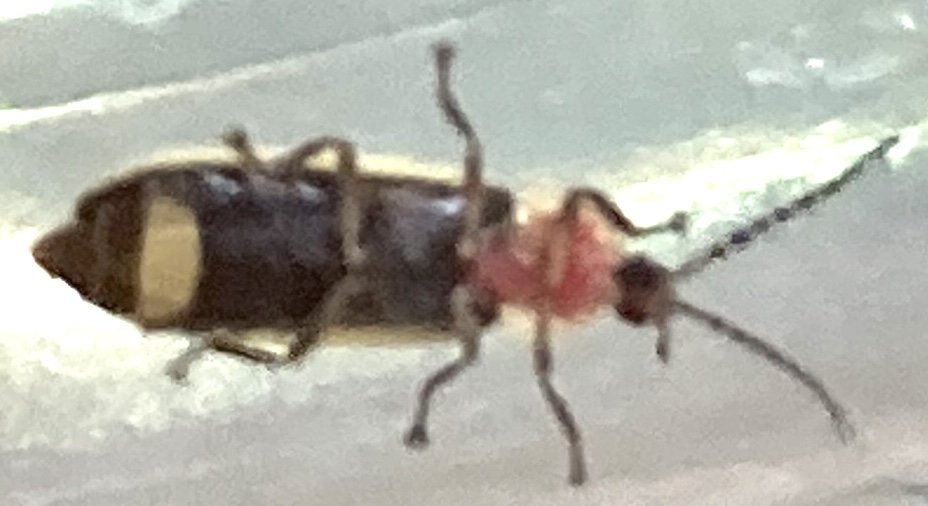
Nice observation of a female Photinus firefly! (You can tell it’s a female by the single, central light organ– in a male there would be two light organs that each fill the whole abdominal segment.)
My guess would be that this firefly is in the Photinus consanguineus group– I’m not sure which based on the flash pattern description and photos.