Observation: Photinus carolinus
Primary Observer:
Rachel Duke
Event Date:
2025-07-04
Status:
Unverified


Survey
Site Name:
Undisclosed
Province/State:
Pennsylvania
Event Date:
2025-07-04
Time of Day:
Night-Time
Start Time:
20:40
End Time:
21:55
Number of Observers:
3
Primary Observer:
Rachel Duke
Additional Observers:
Alex Davis, Dave Duke
target_species_genus:
photinus
target_species_species:
pyralis
Location and Habitat
Location Accuracy (meters):
0-25
Habitat Type:
Woodland/Forest - Trees dominant, and in the over-story
Habitat Type Notes:
The survey site features approximately 2 acres of grass, some of which is wet, as a wetland habitat is located in the forest that borders the property. A stream runs through the property, and the plant life is diverse, featuring both deciduous and coniferous trees.
Some of the plant life includes norway spruce, red maple, black raspberry, black walnut, multiflora rose, wild grape, honeysuckle, cattail, and skunk cabbage.
Elevation (meters):
359.664
Area Searched (hectares):
1
Artificial Light Sources
Vehicles: Yes
Street Lights: No
Buildings: No
Street Lights: No
Buildings: No
Artificial Light Types
Sky Glow (diffuse illumination in the sky): No
Light Trespass (light cast on surfaces beyond its intended target): Yes
Glare (bright light causing visual discomfort): No
Light Trespass (light cast on surfaces beyond its intended target): Yes
Glare (bright light causing visual discomfort): No
Artificial Light Notes:
This survey was conducted on July 4th, so fireworks would periodically go off in the distance, but not on the property where the survey was conducted.
Observation
Observation Type:
With Flash Data
Number Observed:
50+
genus:
photinus
Species:
carolinus
Observation Notes:
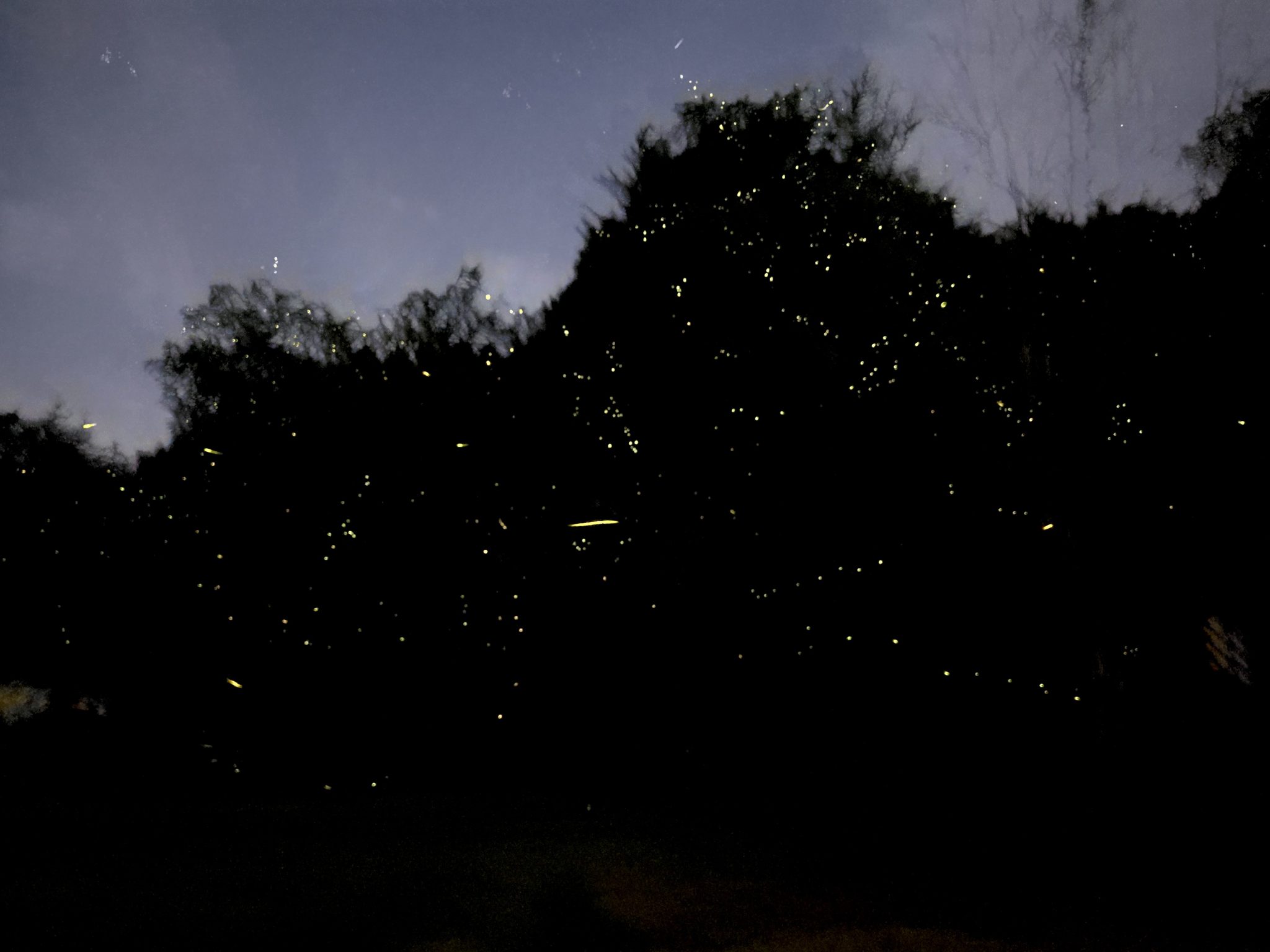
Based on research following the survey, it appears that the frequency, timing, and location of the flashes (across all plants and high into the canopy of the trees) suggest that this is likely the species that flashes so much in such a short time. Some would only flash once, but many had 5-8 flashes in a row, in a small area on a plant. Every single piece of vegetation in the survey site had at least 25-50 of these species of firefly on it. In total, there were most likely 300 of this type of firefly at the site.
Specimen Voucher Number:
Flash Behavior
First Flash Time:
20:55
Last Flash Time:
21:55
First Flash Temp (F):
70
Last Flash Temp (F):
68
Flashes in Pattern:
>4
Flash Color:
Yellow
Flash Pattern Period:
10
Flash Duration:
.5
Flash Interval:
.5
Male Height Zone:
Low (0-3 ft), Moderate (3-8 ft), High (over 8 ft)
Flash Location:
They were present throughout the vegetation on the property and ranged from close to the group to the tops of the trees.
Male Flash Behavior:
We would count 5-8 flashes in a row, followed by a period of darkness, as they flew to another location. They would continue throughout the survey period.
Female Flash Behavior:
We did not observe females flashing back to the males.
1 thought on “Observation: Photinus carolinus”
Leave a Comment
You must be logged in to post a comment.


Thank you for this firefly observation!
While the time of year and location would make sense of Photinus carolinus, I think it is more likely that the dominant firefly you were seeing was a Photuris firefly, as the fireflies that appear to cover/coat tree tops are usually Photuris.
Also, in long-exposure images P. carolinus flash patterns appear as distinctive “strings” of flashes (see examples here), which I don’t really see in your images.
Seems like this site merits further surveys!