Observation: Photinus pyralis
Primary Observer:
Kristina Ann Risvold
Event Date:
2025-07-02
Status:
Verified


Survey
Site Name:
Home
Province/State:
Illinois
Event Date:
2025-07-02
Time of Day:
Day-Time
Start Time:
19:45
End Time:
21:01
Number of Observers:
1
Primary Observer:
Kristina Ann Risvold
Additional Observers:
NA
target_species_genus:
photinus
target_species_species:
pyralis
Location and Habitat
Location Accuracy (meters):
0-25
Habitat Type:
Developed - Sub/urban areas; parks/gardens
Habitat Type Notes:
Hosta, stone crop, perenials, bushes
Elevation (meters):
597
Area Searched (hectares):
.02
Artificial Light Sources
Street Lights: Yes
Artificial Light Types
Sky Glow (diffuse illumination in the sky): Yes
Artificial Light Notes:
Street light behind garage.
Observation
Observation Type:
With Flash Data
Number Observed:
11-50
genus:
photinus
Species:
pyralis
Observation Notes:
Observed male and female. Some males did not see the females light response.
Specimen Voucher Number:
Flash Behavior
First Flash Time:
20:15
Last Flash Time:
20:53
First Flash Temp (F):
85
Last Flash Temp (F):
82
Flashes in Pattern:
1
Flash Color:
Yellow
Flash Pattern Period:
15
Flash Duration:
1
Flash Interval:
1
Male Height Zone:
Low (0-3 ft), Moderate (3-8 ft)
Flash Location:
Females on plants
Male Flash Behavior:
hovering around plants 1 to 5 feet off ground
Female Flash Behavior:
She flashed at him
1 thought on “Observation: Photinus pyralis”
Leave a Comment
You must be logged in to post a comment.


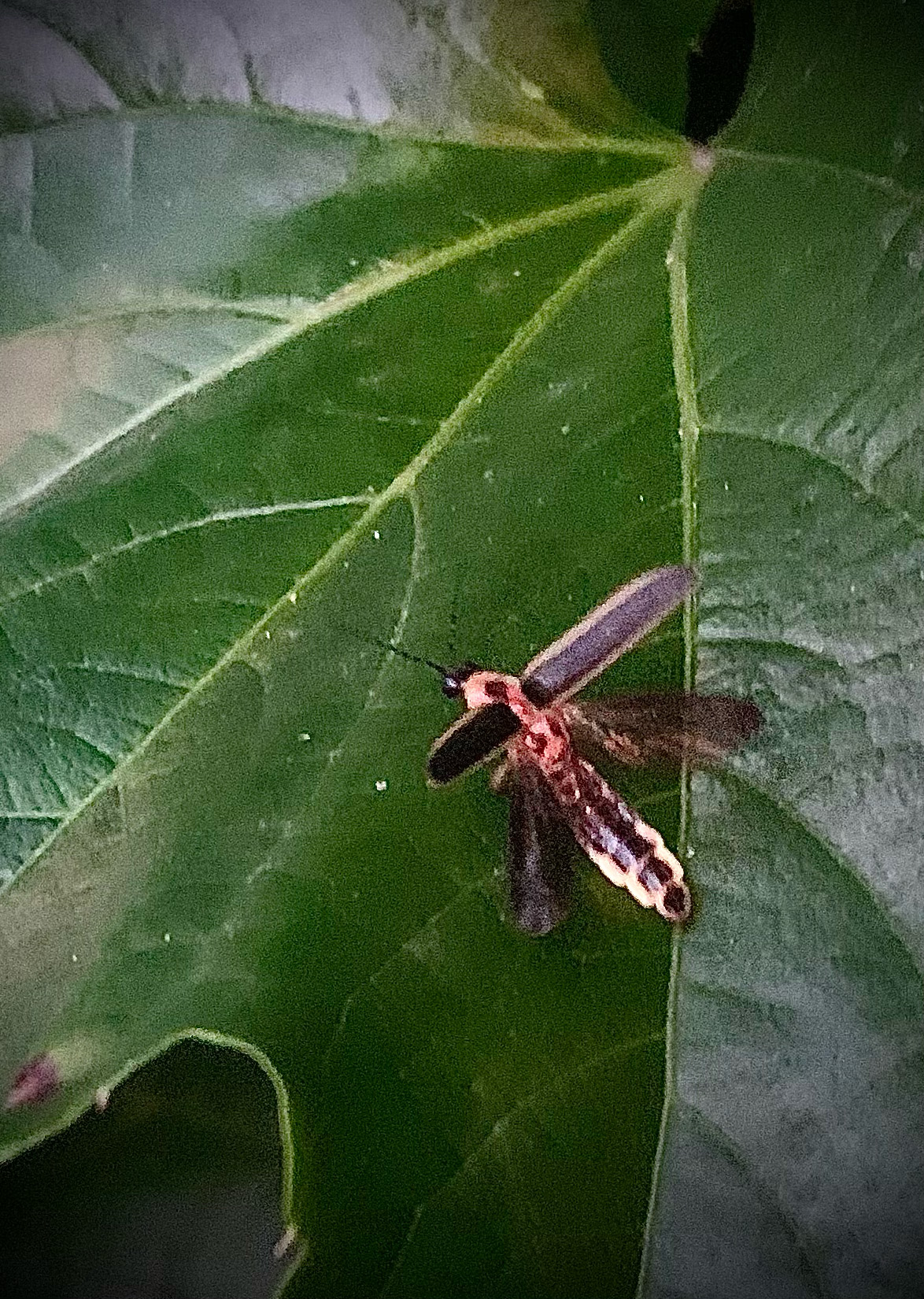
Thank you for submitting this firefly observation! The photos and flash behavior are a good match for Photinus pyralis, which would be the expected species in the urban habitat where they were observed.
A note about flash pattern terminology, for next firefly season:
“Flash pattern period” refers to the number of seconds between the start of a flash pattern and the start of the next repetition of that flash pattern. For example, the big dipper firefly (Photinus pyralis) typically has a flash pattern period of 5-7 seconds.
“Flash duration” is how long each flash lasts. Usually this is too fast to measure accurately, but you can estimate whether it is more or less than 0.5 seconds, you can enter “not recorded,” or you can do a verbal description (such as “very brief”).
“Flash interval” refers to the time between the end of one flash and the beginning of the next. In species with single flash patterns and short flash durations, this is basically the same as “flash pattern period,” just a little shorter.