Candace Fallon, Senior Endangered Species Conservation Biologist
The Golden State: land of sunshine, milk and honey, and… fireflies?
Yes! But probably not the kind you’re picturing.
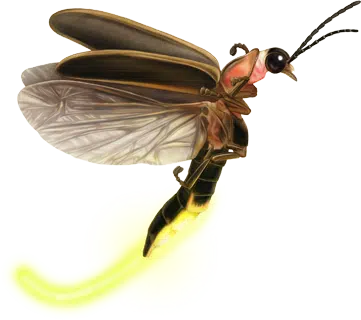
When most people think of fireflies, they imagine warm summer nights filled with blinking lights. While that’s true in many parts of the country, including several western states like Nevada and Arizona, California’s fireflies are a little different. The firefly family Lampyridae includes not only the familiar flashing lightningbugs but also two other groups: daytime dark fireflies and glow-worms. It’s these groups that call the Golden State home. They don’t put on big aerial light shows. Many are active during the day. Others glow from the ground rather than flashing about. They may be less showy—but their lives are every bit as fascinating.
The status of California’s fireflies
California boasts 17 species of daytime dark fireflies and glow-worms. That’s a surprising number for a state where many people don’t realize fireflies exist at all. Here’s the second catch: we know very little about most of them.
The majority are listed as Data Deficient on the IUCN Red List, a global system used to assess species’ conservation status. “Data Deficient” doesn’t mean a species is safe—it simply means there isn’t enough information to determine whether it’s at risk of extinction. For California’s lesser-known species, we just don’t have enough information to know where they stand.
Of the five California species with enough data to evaluate, all are currently categorized as Least Concern, meaning they’re not considered threatened at this time. But research has shown that many firefly species worldwide are declining due to habitat loss, light pollution, pesticides, and climate change.
A closer look reveals that:
Are the species in this second group gone? Or simply overlooked?
In some cases, it may be the latter. Many California fireflies are tiny, active during the day, or live secretive nocturnal lives on the ground in leaf litter or rotting logs. They’re easy to miss. But this uncertainty in their status highlights a real need for more surveys—and more eyes on the ground.
Meet the daytime dark fireflies
So, what exactly is a daytime dark firefly?
As the name suggests, these species are active during the day. Unlike their flashing relatives, adult daytime dark fireflies generally do not produce visible light (although some species do have noticeable lanterns; it is unclear if these are put to use and if so, for what purpose). Instead of using bioluminescent signals to find mates, they rely on chemical communication—pheromones—to locate one another. These daytime fireflies may not light up the night sky, but given their daytime habits, you may have a good chance of encountering one. Plus, the immature stages of these fireflies still produce light, meaning you might come across one of their glowing eggs or larvae at night!
There are currently three genera of daytime (diurnal) fireflies documented in California: Brachylampis, Photinus (which was previously included in the genus Ellychnia), and Pyropyga (see Table 1 for a list of all nine daytime dark fireflies in the state).
The secretive Brachylampis
Very little is known about Brachylampis fireflies. Only two species have been described, both from California, and they’ve only been documented a handful of times. Blaisdell’s firefly (B. blaisdelli) occurs in southern California, with several records from San Diego and Los Angeles Counties. The blood-necked firefly (B. sanguinicollis), hasn’t been recorded in more than 20 years. It was last seen at the University of California’s Big Creek Reserve in Big Sur, Monterey County; prior to that, it was known only from a reservoir in Sequoia National Park. The lack of sightings doesn’t necessarily mean it’s gone—just that the species is rarely encountered and poorly studied. Both species are also tiny and compact—adults are only 5 or 6 mm long, about the width of a pencil eraser—which may contribute to them being overlooked.
The immature stages of these fireflies have not been described, and scientists don’t yet know what the larvae eat. Based on what we know about related species, it’s likely that they prey on soft-bodied invertebrates such as earthworms and snails. Adult specimens have been collected from drift debris—floating or partially submerged plant material carried along by water currents—suggesting they may be associated with riparian habitats.

LINK: INaturalist
LINK: CC BY-NC
Daytime Photinus fireflies
Diurnal species in the genus Photinus occur across California. During the day, adults are typically found resting on vegetation, logs, or tree trunks. Their larvae live in leaf litter and rotting logs, where they are carnivorous and likely feed on snails and slugs—just like many other firefly larvae.
Six species have been documented in California:
The black-bordered elf
The black-bordered elf, Pyropyga nigricans, is widespread across North America and especially common in the West. Adults are under 9 mm with flattened, serrated antennae and reduced light organs. It inhabits a variety of damp environments, including wet forests, creek margins, irrigated lawns, and agricultural fields. Its predatory larvae are riparian and possibly semi-aquatic, often found along sandy lake and stream shores. They feed on earthworms, snails, and even moth larvae.
This species also shows unusual wing polymorphism. In some populations, adult females have shortened, likely nonfunctional wings. In others, both males and females are brachypterous (short-winged).

LINK: INaturalist
LINK: CC BY-NC

LINK: INaturalist
LINK: CC BY
Table 1. Daytime dark firefly species documented from California. Note that activity periods are based on published collection or observation dates, and may be more extensive than is documented.
| Species name | Common name | Status | Activity period | Notes |
| Brachylampis blaisdelli | Blaisdell’s firefly | Data Deficient | May – Jun | Endemic to CA |
| Brachylampis sanguinicollis | Blood-necked firefly | Data Deficient | June | Endemic to CA; not reported since 2003 |
| Photinus californicus | California firefly | Data Deficient | Year-round | Also found in OR, WA, and BC |
| Photinus captiosus | Tricky firefly | Data Deficient | July | Endemic to CA; not reliably reported since 1953 |
| Photinus flavicollis | Yellow-necked firefly | Data Deficient | Apr – Sep | Also found in CO, NM, NV, OK, TX |
| Photinus greeni | Green’s firefly | Least Concern | Mar – Sep | Also found in OR, WA, BC |
| Photinus hatchi | Pacific Northwest firefly | Least Concern | Apr – Oct | Also found in MT, OR, WA, BC |
| Photinus megistus | Greater firefly | Data Deficient | Year-round, with a peak in May and another in Nov | Endemic to CA |
| Pyropyga nigricans | Black-bordered elf | Least Concern | Apr – Oct | Found across the country and into Canada |
| Species name | Common name | Status | Activity period | Notes |
| Brachylampis blaisdelli | Blaisdell’s firefly | Data Deficient | May – Jun | Endemic to CA |
| Brachylampis sanguinicollis | Blood-necked firefly | Data Deficient | June | Endemic to CA; not reported since 2003 |
| Photinus californicus | California firefly | Data Deficient | Year-round | Also found in OR, WA, and BC |
| Photinus captiosus | Tricky firefly | Data Deficient | July | Endemic to CA; not reliably reported since 1953 |
| Photinus flavicollis | Yellow-necked firefly | Data Deficient | Apr – Sep | Also found in CO, NM, NV, OK, TX |
| Photinus greeni | Green’s firefly | Least Concern | Mar – Sep | Also found in OR, WA, BC |
| Photinus hatchi | Pacific Northwest firefly | Least Concern | Apr – Oct | Also found in MT, OR, WA, BC |
| Photinus megistus | Greater firefly | Data Deficient | Year-round, with a peak in May and another in Nov | Endemic to CA |
| Pyropyga nigricans | Black-bordered elf | Least Concern | Apr – Oct | Found across the country and into Canada |
California’s glow-worms
California’s glow-worms represent five different genera and an impressive range of body shapes and lifestyles (see Table 2 for a list of all eight species found in the state). What unites them is their courtship behavior: adult females are flightless and glow steadily from the ground, while the males are winged, do not glow, and fly overhead searching for those glowing females.
The California pink glow-worm
One of the most eye-catching species is the California pink glow-worm, Microphotus angustus. True to its name, adult females are a vivid pink—an unforgettable sight against the brown leaf litter where they can often be found. This species occurs across much of California, particularly in oak woodlands, chaparral, and pine forests, from low elevations up to about 6,500 feet. On warm evenings, females can sometimes be seen glowing from rocks, soil, or leaf litter. As in many glow-worm species, males are smaller than the females and winged with large eyes. The larvae prey on snails and other soft-bodied invertebrates.

LINK: INaturalist
LINK: CC BY-NC
Nelson’s desert firefly
Nelsonphotus is a relatively recently described genus represented by a single species, Nelson’s desert firefly (N. aridus). Known from just a few lower desert sites in southern California (San Diego and Riverside Counties) and northern Mexico, this species is infrequently encountered and remains poorly studied, with limited information about its life history and habitat needs. The larvae and adult females have not been described. The larvae are presumed to be predators of snails and other soft-bodied prey in leaf litter. While we include the species here in the glow-worm group, the luminescent capability of the species is actually unknown, and it is unclear whether adults are active during the day or nocturnal. At least one adult male has been observed during the day.

LINK: BugGuide
The Pterotus glow-worms
The Pterotus glow-worms are among the more conspicuous glow-worms in the state. Males have noticeably branched antennae and may be seen resting on vegetation during the day.
Two species are recorded in California:

LINK: INaturalist
LINK: CC BY-NC

LINK: INaturalist
LINK: CC BY-NC

LINK: INaturalist
LINK: CC BY-NC
The mysterious Phausis “ghosts”
The glow-worms in the genus Phausis are some of California’s most mysterious fireflies.
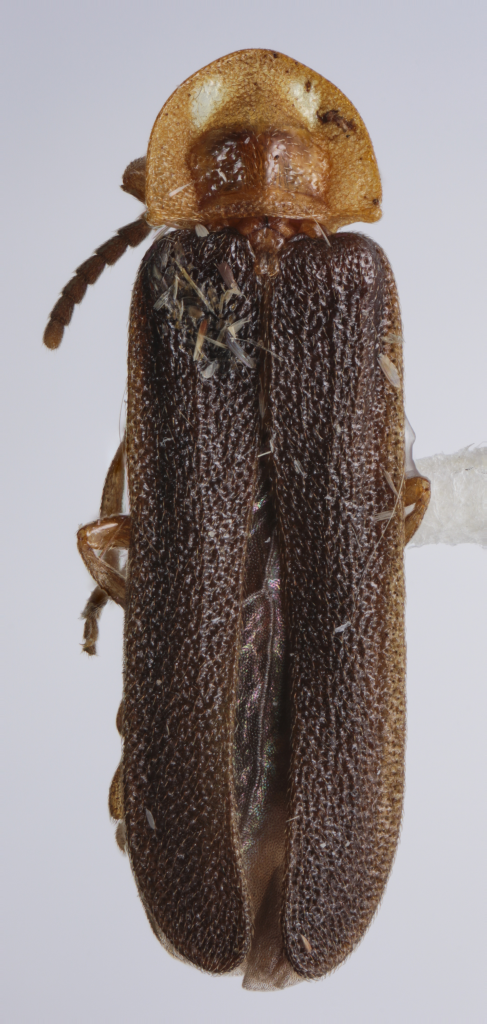
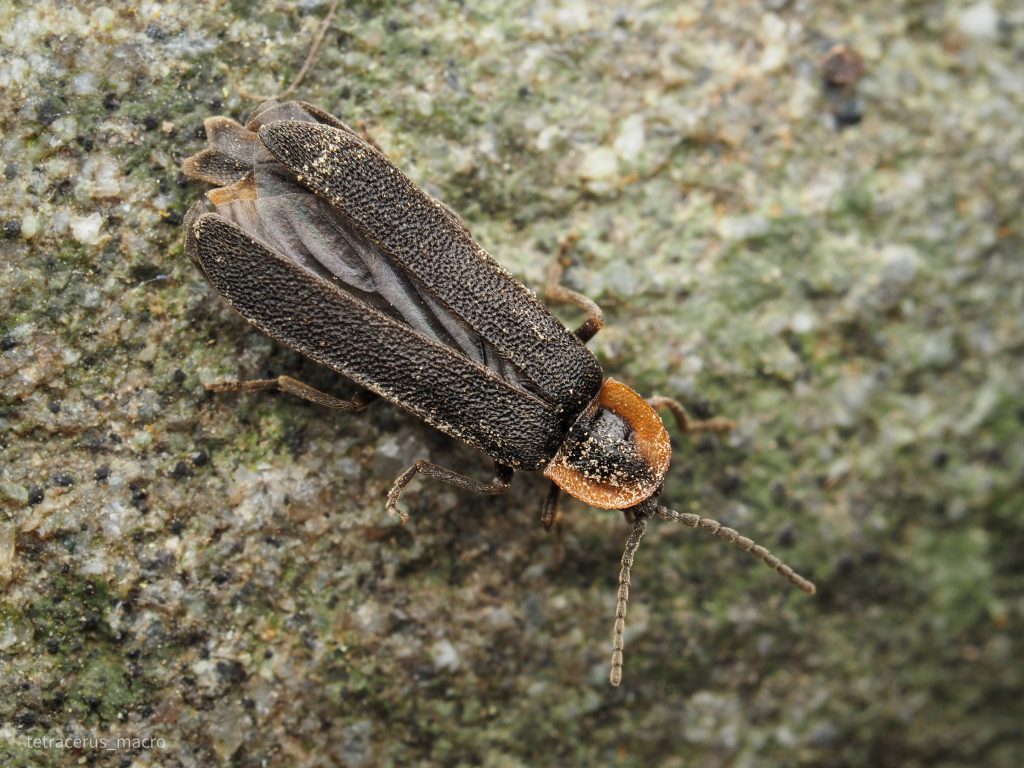
All of these species are considered Data Deficient, meaning we simply don’t know enough about them to assess their conservation status. The males are tiny—usually just 4–7 mm long—and lack lanterns. The females are believed to be flightless and glowing, but in California, none of the adult females or larvae have been formally described. That means we don’t yet know what they look like, how they behave, or exactly where they live.
Males are typically found in forested habitats, and their large eyes suggest they locate females by spotting their glow from above as they fly. Adults are thought to be active mainly from late spring through early summer (roughly May–July), but even that is based on limited records.
Four species are known to occur in California:
Much work remains to be done on California’s Phausis fauna. Simply documenting where they occur—and what the females and larvae look like—would be a major step forward.
LINK: INaturalist
LINK: CC BY-NC
Table 2. Glow-worm firefly species documented from California. Note that activity periods are based on published collection or observation dates, and may be more extensive than is documented.
| Species name | Common name | Status | Adult activity period | Notes |
| Microphotus angustus | California pink glow-worm | Least Concern | Apr – Jul | Possibly endemic to CA, although may extend into southern OR |
| Nelsonphotus aridus | Nelson’s desert firefly | Data Deficient | Feb – Jul | Not reported since 2005 |
| Phausis californica | California ghost | Data Deficient | May – Aug | Endemic to CA; not reported since 2013 |
| Phausis dorothae | Dorothy’s ghost | Data Deficient | May – Jul | Also found in OR |
| Phausis marina | Seaside ghost | Data Deficient | May – Jul | Endemic to CA; not reported since 1976 |
| Phausis riversi | River’s ghost | Data Deficient | May – Jul | Also found in OR |
| Pterotus curticornis | Short-horned glow-worm | Data Deficient | Apr | Endemic to CA; not reported since 1963 |
| Pterotus obscuripennis | Douglas-fir glow-worm | Least Concern | Mar – Jun | Also found in OR and WA |
| Species name | Common name | Status | Adult activity period | Notes |
| Microphotus angustus | California pink glow-worm | Least Concern | Apr – Jul | Possibly endemic to CA, although may extend into southern OR |
| Nelsonphotus aridus | Nelson’s desert firefly | Data Deficient | Feb – Jul | Not reported since 2005 |
| Phausis californica | California ghost | Data Deficient | May – Aug | Endemic to CA; not reported since 2013 |
| Phausis dorothae | Dorothy’s ghost | Data Deficient | May – Jul | Also found in OR |
| Phausis marina | Seaside ghost | Data Deficient | May – Jul | Endemic to CA; not reported since 1976 |
| Phausis riversi | River’s ghost | Data Deficient | May – Jul | Also found in OR |
| Pterotus curticornis | Short-horned glow-worm | Data Deficient | Apr | Endemic to CA; not reported since 1963 |
| Pterotus obscuripennis | Douglas-fir glow-worm | Least Concern | Mar – Jun | Also found in OR and WA |
Community science: putting California fireflies on the map
Diving into California’s fireflies reveals a surprisingly hidden world, with many species still barely known to science. If you live in the state or find yourself visiting, keep your eyes open—you never know what you might find. Even better, share it with us! As I write this, there are no observations from California in the Firefly Atlas. That doesn’t mean people aren’t seeing them. As of the end of 2025, there were more than 3,700 observations of 11 potential firefly species from California on iNaturalist. Most of these are of the California glow-worm, the California pink glow-worm, and the Douglas-fir glow-worm. There have also been a few exciting sightings of uncommonly reported species, such as Blaisdell’s firefly.
LINK: Firefly Atlas
LINK: INaturalist
In other parts of the country, observations from community scientists have helped confirm populations of species that were once considered rare—or even possibly gone forever. With your help, we might be able to do the same in California. Every observation helps fill in the gaps. With so many species still poorly understood, there’s ample opportunity for anyone in California to contribute to science simply by paying attention and sharing what you see.
Learn more about California’s fireflies
Chemsak, J.A. New species of Pterotus LeConte from California (Coleoptera: Lampyridae). The Pan-Pacific Entomologist 54(2): 157-158.
Cicero, J.M. 2006. Two new genera and one new species of firefly (Coleoptera: Lampyridae: Lampyrinae: Lampyrini), with notes on their biology. The Pan-Pacific Entomologist 82(2): 200-207.
Dean, M.B. 1979. The Natural History of Pterotus obscuripennis LeConte (Lampyridae, Coleoptera) [Thesis]. Humboldt State University.
Fender, K.M. 1966. The genus Phausis in America north of Mexico (Coleoptera-Lampyridae). Northwest Science 40(3): 83-95.
Fender, K.M. 1970. Ellychnia of western North America (Coleoptera: Lampyridae). Northwest Science 44: 31-43.
Green, J.W. 1959. Revision of the species of Microphotus, with an emendation of the Lampyrini (Lampyridae). The Coleopterists Bulletin 13(3): 80-96.
Green, J.W. 1961. Revision of the species of Pyropyga (Lampyridae). The Coleopterists Bulletin 15(3): 65-74.
Hodson, A.M. and M.A. Branham. 2024. Revision and phylogeny of the genus Phausis (Coleoptera: Lampyridae) with the description of three new species. Zootaxa. 5458(1): 1–52. https://doi.org/10.11646/zootaxa.5458.1.1
LINK: Https://doi.org/10.11646/zootaxa.5458.1.1
Van Dyke, E.C. 1939. New species and subspecies of West American Coleoptera. The Pan-Pacific Entomologist 15: 15-20.
Notice: Below is a list of 20 important links included on this page.
1. INaturalist
2. CC BY-NC
3. INaturalist
4. CC BY-NC
5. INaturalist
6. CC BY
7. INaturalist
8. CC BY-NC
9. BugGuide
10. INaturalist
11. CC BY-NC
12. INaturalist
13. CC BY-NC
14. INaturalist
15. CC BY-NC
16. INaturalist
17. CC BY-NC
18. Firefly Atlas
19. INaturalist
20. Https://doi.org/10.11646/zootaxa.5458.1.1
Please note that while screen readers have made significant strides, they may still lack full support for optimal web accessibility.
Candace Fallon, Senior Endangered Species Conservation Biologist
The Golden State: land of sunshine, milk and honey, and… fireflies?
Yes! But probably not the kind you’re picturing.
When most people think of fireflies, they imagine warm summer nights filled with blinking lights. While that’s true in many parts of the country, including several western states like Nevada and Arizona, California’s fireflies are a little different. The firefly family Lampyridae includes not only the familiar flashing lightningbugs but also two other groups: daytime dark fireflies and glow-worms. It’s these groups that call the Golden State home. They don’t put on big aerial light shows. Many are active during the day. Others glow from the ground rather than flashing about. They may be less showy—but their lives are every bit as fascinating.
The status of California’s fireflies
California boasts 17 species of daytime dark fireflies and glow-worms. That’s a surprising number for a state where many people don’t realize fireflies exist at all. Here’s the second catch: we know very little about most of them.
The majority are listed as Data Deficient on the IUCN Red List, a global system used to assess species’ conservation status. “Data Deficient” doesn’t mean a species is safe—it simply means there isn’t enough information to determine whether it’s at risk of extinction. For California’s lesser-known species, we just don’t have enough information to know where they stand.
Of the five California species with enough data to evaluate, all are currently categorized as Least Concern, meaning they’re not considered threatened at this time. But research has shown that many firefly species worldwide are declining due to habitat loss, light pollution, pesticides, and climate change.
A closer look reveals that:
- Seven species are endemic to California, meaning they occur nowhere else on Earth (at least, based on what we know right now). All of these are Data Deficient.
- Six Data Deficient species haven’t been reliably reported in a decade or more.
Are the species in this second group gone? Or simply overlooked?
In some cases, it may be the latter. Many California fireflies are tiny, active during the day, or live secretive nocturnal lives on the ground in leaf litter or rotting logs. They’re easy to miss. But this uncertainty in their status highlights a real need for more surveys—and more eyes on the ground.
Meet the daytime dark fireflies
So, what exactly is a daytime dark firefly?
As the name suggests, these species are active during the day. Unlike their flashing relatives, adult daytime dark fireflies generally do not produce visible light (although some species do have noticeable lanterns; it is unclear if these are put to use and if so, for what purpose). Instead of using bioluminescent signals to find mates, they rely on chemical communication—pheromones—to locate one another. These daytime fireflies may not light up the night sky, but given their daytime habits, you may have a good chance of encountering one. Plus, the immature stages of these fireflies still produce light, meaning you might come across one of their glowing eggs or larvae at night!
There are currently three genera of daytime (diurnal) fireflies documented in California: Brachylampis, Photinus (which was previously included in the genus Ellychnia), and Pyropyga (see Table 1 for a list of all nine daytime dark fireflies in the state).
The secretive Brachylampis
Very little is known about Brachylampis fireflies. Only two species have been described, both from California, and they’ve only been documented a handful of times. Blaisdell’s firefly (B. blaisdelli) occurs in southern California, with several records from San Diego and Los Angeles Counties. The blood-necked firefly (B. sanguinicollis), hasn’t been recorded in more than 20 years. It was last seen at the University of California’s Big Creek Reserve in Big Sur, Monterey County; prior to that, it was known only from a reservoir in Sequoia National Park. The lack of sightings doesn’t necessarily mean it’s gone—just that the species is rarely encountered and poorly studied. Both species are also tiny and compact—adults are only 5 or 6 mm long, about the width of a pencil eraser—which may contribute to them being overlooked.
The immature stages of these fireflies have not been described, and scientists don’t yet know what the larvae eat. Based on what we know about related species, it’s likely that they prey on soft-bodied invertebrates such as earthworms and snails. Adult specimens have been collected from drift debris—floating or partially submerged plant material carried along by water currents—suggesting they may be associated with riparian habitats.

Daytime Photinus fireflies
Diurnal species in the genus Photinus occur across California. During the day, adults are typically found resting on vegetation, logs, or tree trunks. Their larvae live in leaf litter and rotting logs, where they are carnivorous and likely feed on snails and slugs—just like many other firefly larvae.
Six species have been documented in California:
- California firefly (Photinus californicus) – often referred to as the California glow-worm, which can be confusing since this is a diurnal species. Found throughout the state. Appears restricted to riparian habitats. Often associated with oak woodlands at mid-elevations of 3,000–4,000 feet.
- Tricky firefly (Photinus captiosus) — has an extremely limited known range. It has only been documented from Sagehen Creek on the eastern slope of the Sierra Nevada in Nevada County.
- Yellow-necked firefly (Photinus flavicollis) — something of an outlier among daytime fireflies. Unlike most diurnal species, it retains lanterns and may be capable of producing light as an adult. However, because it hasn’t been observed active at night, researchers still aren’t sure how—or if—it uses bioluminescence in the wild. It looks quite different than other daytime Photinus species. Only one locality has been reported from California, from the Laguna Mountains in San Diego County. Elsewhere across its range, it is reported from mountainous areas and hot springs. Males appear to be attracted to UV lights.
- Green’s firefly (Photinus greeni) and the Pacific Northwest firefly (P. hatchi) — both appear to be relatively common and widespread, and are currently considered species of Least Concern. Primary distribution is in the Pacific Northwest, although some populations spill into the northern part of California.
- Greater firefly (Photinus megistus) — found across much of California from the Bay Area south to Los Angeles and east to the western slopes of the Sierra Nevada. Habitat associations are largely undocumented, although in some places it has been found in riparian oak woodlands.
The black-bordered elf
The black-bordered elf, Pyropyga nigricans, is widespread across North America and especially common in the West. Adults are under 9 mm with flattened, serrated antennae and reduced light organs. It inhabits a variety of damp environments, including wet forests, creek margins, irrigated lawns, and agricultural fields. Its predatory larvae are riparian and possibly semi-aquatic, often found along sandy lake and stream shores. They feed on earthworms, snails, and even moth larvae.
This species also shows unusual wing polymorphism. In some populations, adult females have shortened, likely nonfunctional wings. In others, both males and females are brachypterous (short-winged).


Table 1. Daytime dark firefly species documented from California. Note that activity periods are based on published collection or observation dates, and may be more extensive than is documented.
| Species name | Common name | Status | Activity period | Notes |
| Brachylampis blaisdelli | Blaisdell’s firefly | Data Deficient | May – Jun | Endemic to CA |
| Brachylampis sanguinicollis | Blood-necked firefly | Data Deficient | June | Endemic to CA; not reported since 2003 |
| Photinus californicus | California firefly | Data Deficient | Year-round | Also found in OR, WA, and BC |
| Photinus captiosus | Tricky firefly | Data Deficient | July | Endemic to CA; not reliably reported since 1953 |
| Photinus flavicollis | Yellow-necked firefly | Data Deficient | Apr – Sep | Also found in CO, NM, NV, OK, TX |
| Photinus greeni | Green’s firefly | Least Concern | Mar – Sep | Also found in OR, WA, BC |
| Photinus hatchi | Pacific Northwest firefly | Least Concern | Apr – Oct | Also found in MT, OR, WA, BC |
| Photinus megistus | Greater firefly | Data Deficient | Year-round, with a peak in May and another in Nov | Endemic to CA |
| Pyropyga nigricans | Black-bordered elf | Least Concern | Apr – Oct | Found across the country and into Canada |
California’s glow-worms
California’s glow-worms represent five different genera and an impressive range of body shapes and lifestyles (see Table 2 for a list of all eight species found in the state). What unites them is their courtship behavior: adult females are flightless and glow steadily from the ground, while the males are winged, do not glow, and fly overhead searching for those glowing females.
The California pink glow-worm
One of the most eye-catching species is the California pink glow-worm, Microphotus angustus. True to its name, adult females are a vivid pink—an unforgettable sight against the brown leaf litter where they can often be found. This species occurs across much of California, particularly in oak woodlands, chaparral, and pine forests, from low elevations up to about 6,500 feet. On warm evenings, females can sometimes be seen glowing from rocks, soil, or leaf litter. As in many glow-worm species, males are smaller than the females and winged with large eyes. The larvae prey on snails and other soft-bodied invertebrates.

Nelson’s desert firefly
Nelsonphotus is a relatively recently described genus represented by a single species, Nelson’s desert firefly (N. aridus). Known from just a few lower desert sites in southern California (San Diego and Riverside Counties) and northern Mexico, this species is infrequently encountered and remains poorly studied, with limited information about its life history and habitat needs. The larvae and adult females have not been described. The larvae are presumed to be predators of snails and other soft-bodied prey in leaf litter. While we include the species here in the glow-worm group, the luminescent capability of the species is actually unknown, and it is unclear whether adults are active during the day or nocturnal. At least one adult male has been observed during the day.

The Pterotus glow-worms
The Pterotus glow-worms are among the more conspicuous glow-worms in the state. Males have noticeably branched antennae and may be seen resting on vegetation during the day.
Two species are recorded in California:
- The Douglas-fir glow-worm, Pterotus obscuripennis, is widespread and relatively common across much of the state. Adult females are pale, soft-bodied, and entirely ground-dwelling. The glowing larvae hunt in leaf litter and sometimes in open grassy areas.
- The short-horned glow-worm, Pterotus curticornis, is far more restricted and known from only a single site at Boyd Deep Canyon Research Center in Riverside County, southern California. It has not been reported for more than 60 years.


The mysterious Phausis “ghosts”
The glow-worms in the genus Phausis are some of California’s most mysterious fireflies.
All of these species are considered Data Deficient, meaning we simply don’t know enough about them to assess their conservation status. The males are tiny—usually just 4–7 mm long—and lack lanterns. The females are believed to be flightless and glowing, but in California, none of the adult females or larvae have been formally described. That means we don’t yet know what they look like, how they behave, or exactly where they live.
Males are typically found in forested habitats, and their large eyes suggest they locate females by spotting their glow from above as they fly. Adults are thought to be active mainly from late spring through early summer (roughly May–July), but even that is based on limited records.
Four species are known to occur in California:
- The California ghost (Phausis californica) — Known from scattered records across central and northern California, but extremely poorly documented. Habitat and life history details are still largely unknown. The last known observation of this species was along the North Fork American River in Placer County in 2013.
- Seaside ghost (Phausis marina) — As its name suggests, this species is associated with coastal localities, though very little has been published about its biology. It has been reported from Marin and Humboldt Counties, but the last known record is from 1976.
- River’s ghost (Phausis riversi) — Documented from northern California (including Trinity, El Dorado, Shasta, and Sonoma Counties). Most records are decades old. The most recent observation was in 2016, when individuals were collected during a long-term seine net survey in the El Dorado Canal in the Sierra Nevada.
- Dorothy’s ghost (Phausis dorothae) — Known from just four locations in California, including Upland, Mill Valley, Castle Crags, and the El Dorado Canal.
Much work remains to be done on California’s Phausis fauna. Simply documenting where they occur—and what the females and larvae look like—would be a major step forward.
Table 2. Glow-worm firefly species documented from California. Note that activity periods are based on published collection or observation dates, and may be more extensive than is documented.
| Species name | Common name | Status | Adult activity period | Notes |
| Microphotus angustus | California pink glow-worm | Least Concern | Apr – Jul | Possibly endemic to CA, although may extend into southern OR |
| Nelsonphotus aridus | Nelson’s desert firefly | Data Deficient | Feb – Jul | Not reported since 2005 |
| Phausis californica | California ghost | Data Deficient | May – Aug | Endemic to CA; not reported since 2013 |
| Phausis dorothae | Dorothy’s ghost | Data Deficient | May – Jul | Also found in OR |
| Phausis marina | Seaside ghost | Data Deficient | May – Jul | Endemic to CA; not reported since 1976 |
| Phausis riversi | River’s ghost | Data Deficient | May – Jul | Also found in OR |
| Pterotus curticornis | Short-horned glow-worm | Data Deficient | Apr | Endemic to CA; not reported since 1963 |
| Pterotus obscuripennis | Douglas-fir glow-worm | Least Concern | Mar – Jun | Also found in OR and WA |
Community science: putting California fireflies on the map
Diving into California’s fireflies reveals a surprisingly hidden world, with many species still barely known to science. If you live in the state or find yourself visiting, keep your eyes open—you never know what you might find. Even better, share it with us! As I write this, there are no observations from California in the Firefly Atlas. That doesn’t mean people aren’t seeing them. As of the end of 2025, there were more than 3,700 observations of 11 potential firefly species from California on iNaturalist. Most of these are of the California glow-worm, the California pink glow-worm, and the Douglas-fir glow-worm. There have also been a few exciting sightings of uncommonly reported species, such as Blaisdell’s firefly.
In other parts of the country, observations from community scientists have helped confirm populations of species that were once considered rare—or even possibly gone forever. With your help, we might be able to do the same in California. Every observation helps fill in the gaps. With so many species still poorly understood, there’s ample opportunity for anyone in California to contribute to science simply by paying attention and sharing what you see.
Learn more about California’s fireflies
Chemsak, J.A. New species of Pterotus LeConte from California (Coleoptera: Lampyridae). The Pan-Pacific Entomologist 54(2): 157-158.
Cicero, J.M. 2006. Two new genera and one new species of firefly (Coleoptera: Lampyridae: Lampyrinae: Lampyrini), with notes on their biology. The Pan-Pacific Entomologist 82(2): 200-207.
Dean, M.B. 1979. The Natural History of Pterotus obscuripennis LeConte (Lampyridae, Coleoptera) [Thesis]. Humboldt State University.
Fender, K.M. 1966. The genus Phausis in America north of Mexico (Coleoptera-Lampyridae). Northwest Science 40(3): 83-95.
Fender, K.M. 1970. Ellychnia of western North America (Coleoptera: Lampyridae). Northwest Science 44: 31-43.
Green, J.W. 1959. Revision of the species of Microphotus, with an emendation of the Lampyrini (Lampyridae). The Coleopterists Bulletin 13(3): 80-96.
Green, J.W. 1961. Revision of the species of Pyropyga (Lampyridae). The Coleopterists Bulletin 15(3): 65-74.
Hodson, A.M. and M.A. Branham. 2024. Revision and phylogeny of the genus Phausis (Coleoptera: Lampyridae) with the description of three new species. Zootaxa. 5458(1): 1–52. https://doi.org/10.11646/zootaxa.5458.1.1
Van Dyke, E.C. 1939. New species and subspecies of West American Coleoptera. The Pan-Pacific Entomologist 15: 15-20.