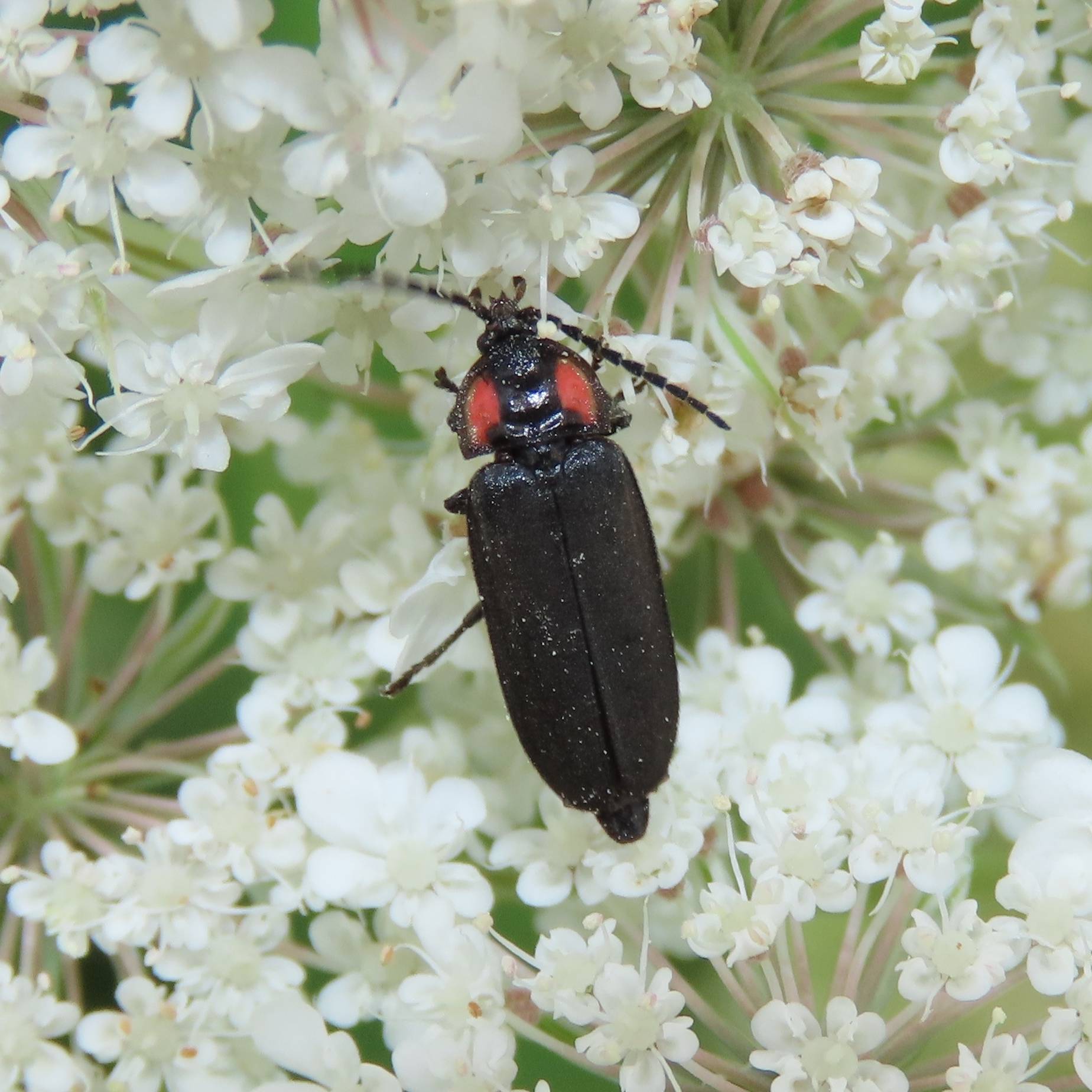
Black-bordered elf

Common Name

Black-bordered elf, dark firefly

Scientific Name

Pyropyga nigricans

Recent Synonyms

None

Adult Male Size

4.25-8.5 mm

Diet

Earthworms, snails, and moth larvae

Firefly Atlas Category

Common species
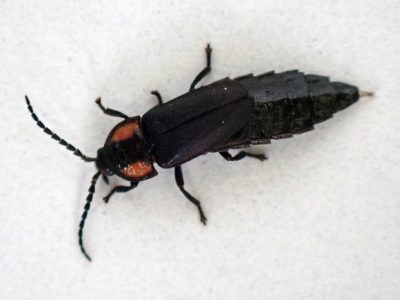
The black-bordered elf is a widely distributed diurnal, dark firefly known to occur across western Canada and the US into Mexico. It is more common in the western and northern parts of its range. Larvae may be semi-aquatic. This species can be found in a variety of moist habitats including riparian areas, wet forests, and fields.
  • Dorsal view of a black-bordered elf (Pyropyga nigricans).
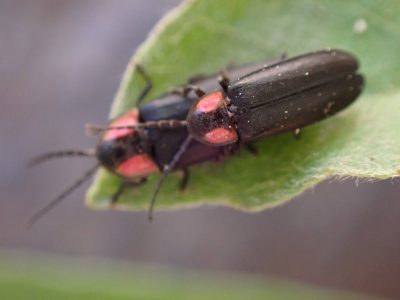
  • A mating pair of black-bordered elves (Pyropyga nigricans) on a leaf.

Identifying Features

Small and lantern-less. Pronotum (head shield) typically has a thick black margin. Positive ID to species usually requires dissection of male genitalia. This species shows unique wing polymorphism: in some populations adult females have shortened, likely unusable, wings, while in others both sexes are fully winged.

Conservation

Status

IUCN Red List

The International Union for Conservation of Nature (IUCN) Red List of Threatened Species is an inventory of the global conservation status and extinction risk of biological species, maintained collectively by scientists worldwide.

Least Concern (LC)

NatureServe

The NatureServe conservation status ranks use a standardized methodology to assess the extinction risk of species, with a focus on the US and Canada. State wildlife agencies and natural heritage programs use these ranks to prioritize species for conservation actions.

Globally secure (G5) Apparently secure to secure in Alberta, Manitoba, Ontario, Saskatchewan (S4S5) Apparently secure in New Brunswick (S4) State/province rank not yet assessed in Arizona, California, Colorado, Georgia, Idaho, Indiana, Kentucky, Maine, Michigan, Montana, Nevada, New Jersey, New Mexico, New York, Oklahoma, Rhode Island, Texas, Utah, Virginia, Washington, British Columbia, Quebec (SNR) State/province unrankable due to lack of information in Wisconsin, Northwest Territories (SU)

Species of Greatest Conservation Need Lists

Species of Greatest Conservation Need (SGCN) are lists of species included in State Wildlife Action Plans, identifying animals and plants that need the most conservation attention and resources at the state and region level.

None

US Endangered Species Act

The Endangered Species Act is a United States law that provides legal protections to species that are officially listed as endangered or threatened by the US Fish and Wildlife Service.

N/A

Threats

Threats to this species are not well documented and are probably localized in nature.

Location

Distribution

USA

Arizona, California, Colorado, Idaho, Indiana, Kentucky, Maine, Michigan, Montana, New Jersey, New Mexico, Nevada, New York, Oklahoma, Texas, Utah, Virginia, Washington

Canada

Alberta, British Columbia, Manitoba, Ontario, Quebec
Mexico

Details

The black-bordered elf is widely distributed across Canada, from British Columbia to the Atlantic Coast, south through much of the US except the Southeast, and into Mexico. It is more common in the western and northern portions of its range.

Habitat

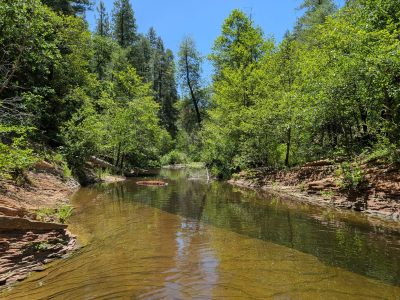
This day-active firefly can be found in a variety of moist habitats including riparian areas, wet forests, and fields.
  • A landscape image depicting Oak Creek near Sedona, AZ. The creek has shallow greenish brown water and is lined with rocky banks and riparian trees.
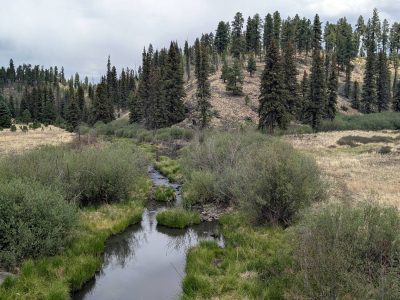
  • A landscape shot from the White Mountains of eastern Arizona showing a small creek with green riparian vegetation surrounded by dry hills and conifers.

Behavior

Activity Period

Adults have been observed from May through September, depending on the location.

Flash Pattern

Adults are diurnal and lantern-less. Courtship occurs through pheromone cues

Sources

Faust, L. F. 2017. Fireflies, Glow-worms, and Lightning Bugs. Identification and Natural History of the Fireflies of the Eastern and Central United States and Canada. University of Georgia Press. Athens, GA. 356 pp. Walker, A. 2024. Guide to Fireflies of the Southwest. New Mexico BioPark Society, Albuquerque, NM. Available from https://www.fireflyatlas.org/learn/firefly-publications. Accessed on 02 October 2025. Walker, A. 2021. Pyropyga nigricans. The IUCN Red List of Threatened Species 2021: e.T163979721A166771213. https://dx.doi.org/10.2305/IUCN.UK.2021-1.RLTS.T163979721A166771213.en. Accessed on 02 October 2025. Walker, A. 2021. Pyropyga nigricans. NatureServe Explorer. https://explorer.natureserve.org/Taxon/ELEMENT_GLOBAL.2.747840/Pyropyga_nigricans. Accessed on 02 October 2025.

Last Updated

Connect

Sign up for our newsletter to receive updates.

Follow

Follow the Xerces Society.

Share

Share this page.

Support

Support the Xerces Society's conservation work.

This is a project of the Xerces Society, working in collaboration with the IUCN SSC Firefly Specialist Group and New Mexico BioPark Society.

Copyright © 2026 The Xerces Society •1631 NE Broadway Street, #821 • Portland OR 97232 USA
Firefly logo by Ink Dwell studio; © 2020 Jane Kim