Common Name
Ant-loving scrub firefly
Scientific Name
Pleotomodes needhami
Recent Synonyms
None
Adult Male Size
7 mm
Diet
Unknown
Firefly Atlas Category
Focal species
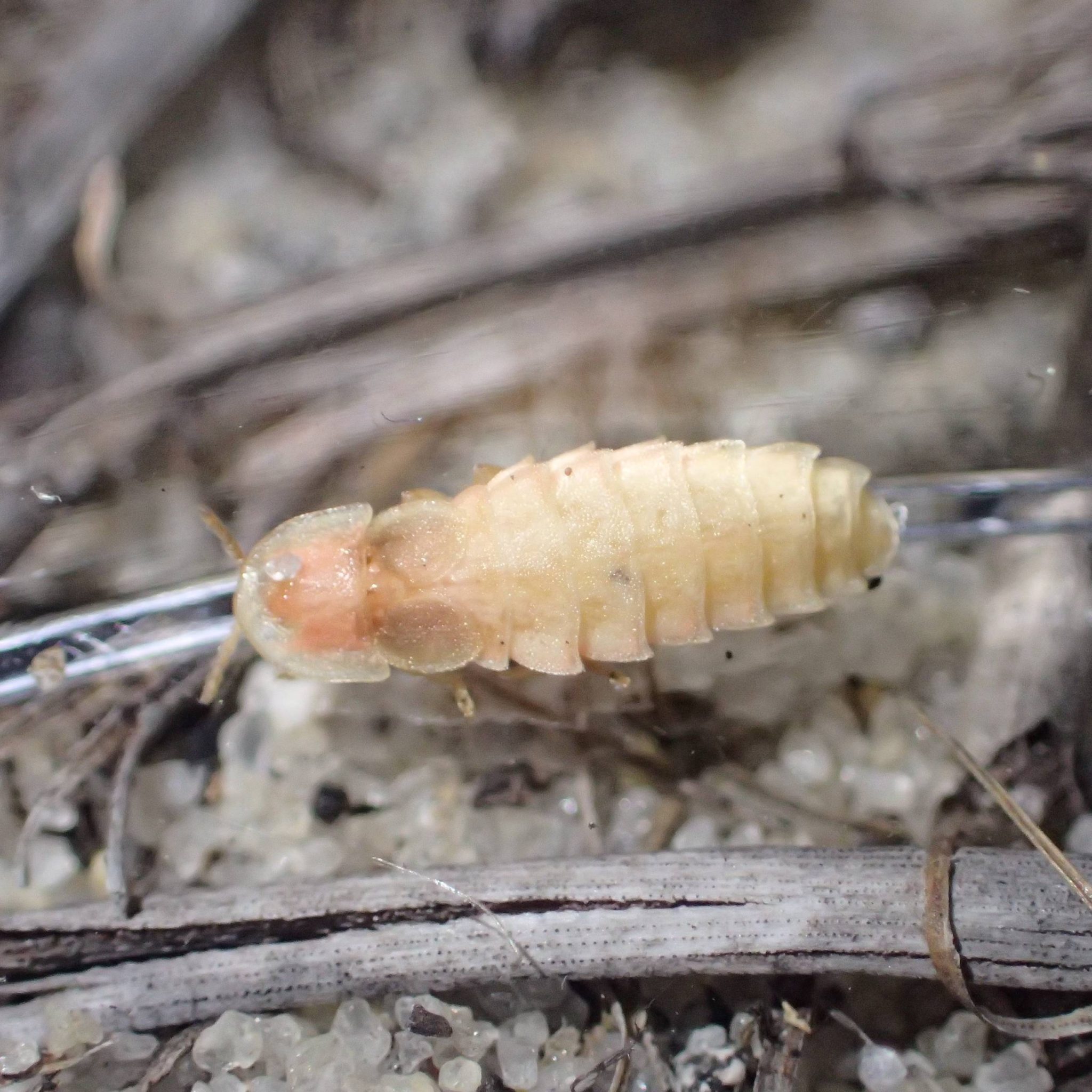
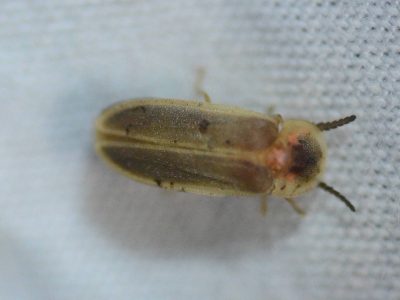
The ant-loving scrub firefly is an unusual, range-restricted species found in association with ants in xeric pine and oak scrub forests along the Mid-Florida Ridge region. Larvae, pupae, and adults of both sexes have been found within ant nests. It is unclear how these fireflies evade detection by the ants, if their dispersal is assisted by them, or if they are true ant obligates. Because of their primarily subterranean nature, very little is known about this species. Perhaps unsurprisingly, it has not been documented from very many localities. Threats to this species include habitat loss and degradation due to agricultural and residential development, as well as light pollution from nearby towns.
Conservation
Reason(s) For Firefly Atlas Focal Species Designation
Reliably identifiable, Suspected population loss
Status
IUCN Red List
The International Union for Conservation of Nature (IUCN) Red List of Threatened Species is an inventory of the global conservation status and extinction risk of biological species, maintained collectively by scientists worldwide.Endangered (EN)
NatureServe
The NatureServe conservation status ranks use a standardized methodology to assess the extinction risk of species, with a focus on the US and Canada. State wildlife agencies and natural heritage programs use these ranks to prioritize species for conservation actions.Globally imperiled to critically imperiled (G1G2) Imperiled to critically imperiled in Florida (S1S2)
Species of Greatest Conservation Need Lists
Species of Greatest Conservation Need (SGCN) are lists of species included in State Wildlife Action Plans, identifying animals and plants that need the most conservation attention and resources at the state and region level.Florida
US Endangered Species Act
The Endangered Species Act is a United States law that provides legal protections to species that are officially listed as endangered or threatened by the US Fish and Wildlife Service.N/A
Threats
Threats to this species include habitat loss and degradation due to agricultural and residential development as well as light pollution from nearby towns. Residential development and clearing of land for citrus and other agriculture is ongoing within this species' range. It is particularly vulnerable to habitat loss, as females are flightless and may not be able to colonize new areas as habitats are destroyed. Trampling of these flightless females is also a potential threat, as they are restricted to ground level habitats.
Location
Distribution
USA
Florida
Details
The ant-loving scrub firefly is known from only a few occurrences scattered throughout Highlands County and the southern tip of Polk County in central Florida, including Archbold Biological Research Station.
Habitat
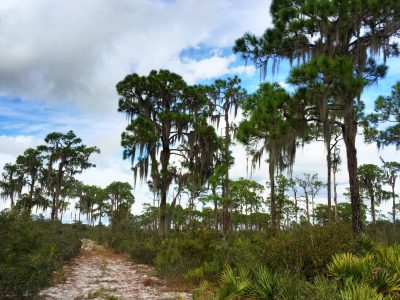
This species occurs in association with several species of ants in the xeric pine and oak scrub forests of the Mid-Florida Ridge, including Trachymyrmex septentrionalis, Odontomachus clarus, and possibly a Dorymyrmex species.
Behavior
Activity Period
Flightless adult females emerge from ant colonies after dark in mid-April.
Flash Pattern
Adult females emit light for up to an hour (or until mating) to attract males. Males glow in response to female signaling, continuing to glow until after mating.
Sources
Cicero, J. and A. Walker. 2022. Pleotomodes needhami. The IUCN Red List of Threatened Species 2022: e.T164045411A166771463. https://dx.doi.org/10.2305/IUCN.UK.2022-1.RLTS.T164045411A166771463.en. Accessed on 25 September 2025.
Cicero, J. and A. Walker. 2022. Pleotomodes needhami. NatureServe Explorer. https://explorer.natureserve.org/Taxon/ELEMENT_GLOBAL.23.31169/Pleotomodes_needhami. Accessed 25 September 2025.