Common Name
Florida intertidal firefly
Scientific Name
Micronaspis floridana
Recent Synonyms
None
Adult Male Size
8-12 mm
Diet
Snails
Firefly Atlas Category
Focal species
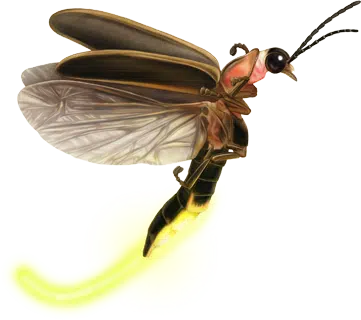
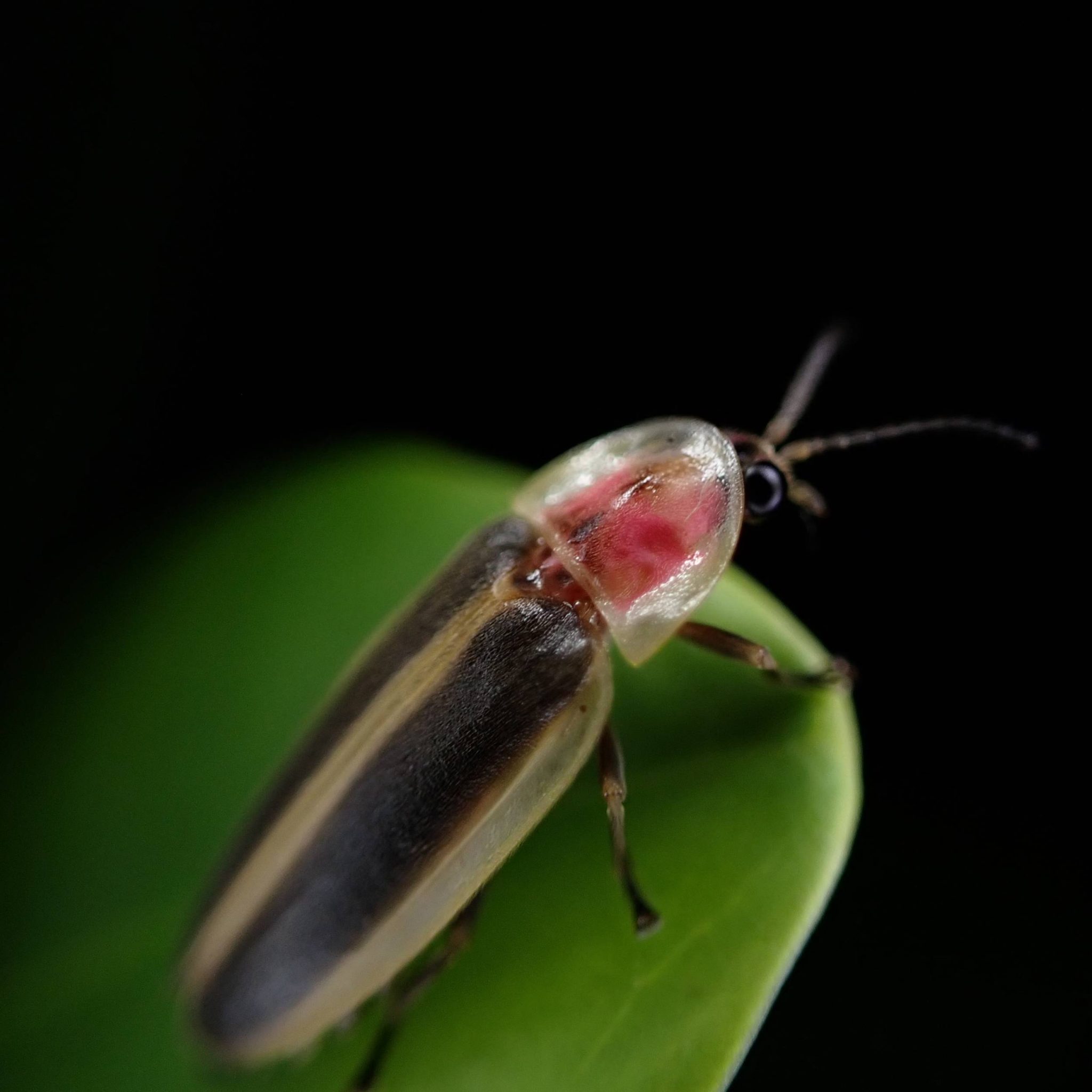
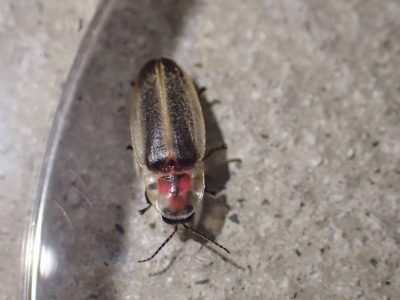
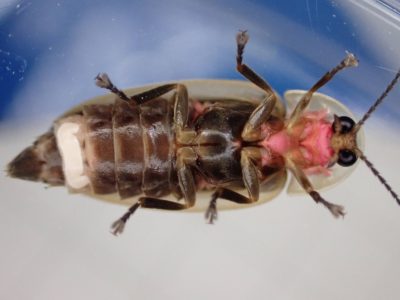
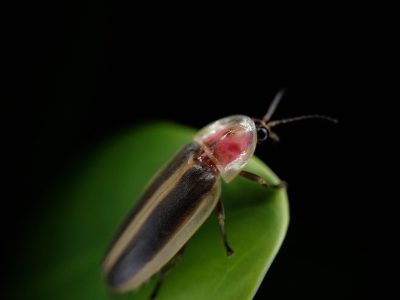
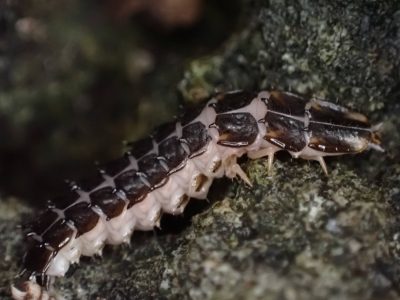
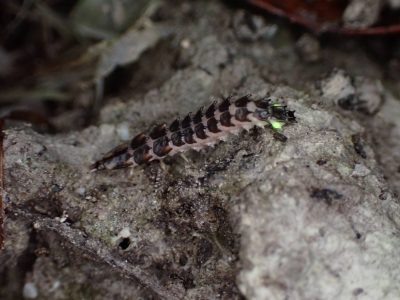
The Florida intertidal firefly is found in mangroves, salt marshes, and mud flats along the coast of Florida and some islands of the Bahamas. Adults are nocturnal, with both sexes winged and flashing. Larvae can often be seen glowing on the soil surface near adults. This species is threatened by coastal development, climate change (particularly sea level rise), and light pollution.
Conservation
Reason(s) For Firefly Atlas Focal Species Designation
Reliably identifiable, Suspected population loss
Status
IUCN Red List
The International Union for Conservation of Nature (IUCN) Red List of Threatened Species is an inventory of the global conservation status and extinction risk of biological species, maintained collectively by scientists worldwide.Endangered (EN)
NatureServe
The NatureServe conservation status ranks use a standardized methodology to assess the extinction risk of species, with a focus on the US and Canada. State wildlife agencies and natural heritage programs use these ranks to prioritize species for conservation actions.Globally vulnerable (G3?) Vulnerable in Florida (S3)
Species of Greatest Conservation Need Lists
Species of Greatest Conservation Need (SGCN) are lists of species included in State Wildlife Action Plans, identifying animals and plants that need the most conservation attention and resources at the state and region level.None
US Endangered Species Act
The Endangered Species Act is a United States law that provides legal protections to species that are officially listed as endangered or threatened by the US Fish and Wildlife Service.In Review (IR)
Threats
This species is threatened by coastal development, light pollution, agricultural activities, and pesticides. Mangroves are among the most endangered coastal habitats in Florida, and many have already been decimated, potentially leading to the decline of this species. Sea-level rise and increasing frequency and severity of hurricanes and other storms may also pose a threat. Several populations in Florida now appear to be locally extinct.
Location
Distribution
USA
Florida
Bahamas
Details
This firefly occurs along the Florida coast and on some northern islands of the Bahamas. It is suspected to occur in Central America.
Habitat
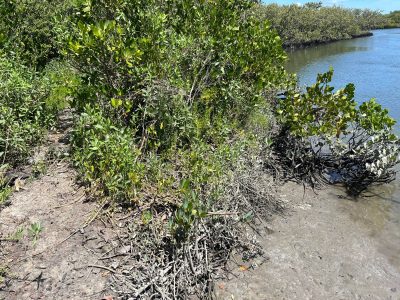
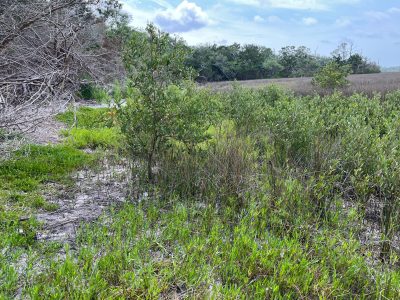
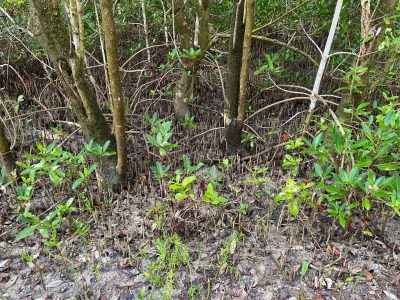
True to its name, the Florida intertidal firefly inhabits the intertidal zone of salt marshes, mudflats, and mangroves in coastal areas.
Behavior
Activity Period
Adults can be active year-round, but particularly from March through May. Larvae are typically visible at the same time as the adults.
Flash Pattern
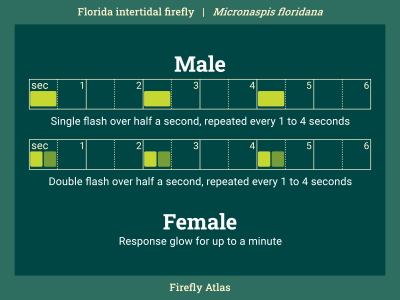
The courtship flash pattern of the Florida intertidal firefly consists of a single or bimodal flash lasting 0.14 seconds and repeated at intervals ranging from 1.5-4 seconds. Males flash while flying at low to moderate heights and females respond from low vegetation or rocky substrates with a distinctive modulated flash-glow. Female response is a glow for up to one minute.

Sources
Almquist, D., B. Young, C. Fallon, A. Walker. 2023. Micronaspis floridana: Florida Intertidal Firefly. NatureServe Explorer. https://explorer.natureserve.org/Taxon/ELEMENT_GLOBAL.2.119574/Micronaspis_floridana. Accessed on 08 September 2025.
Fallon, C. and A. Walker. 2021. Micronaspis floridana. The IUCN Red List of Threatened Species 2021: e.T13374A166771169. https://dx.doi.org/10.2305/IUCN.UK.2021-1.RLTS.T13374A166771169.en. Accessed on 08 September 2025.
Faust, L.F. 2017. Fireflies, Glow-worms, and Lightning Bugs. Identification and Natural History of the Fireflies of the Eastern and Central United States and Canada. University of Georgia Press. Athens, GA. 356 pp.
Joyce, R. 2024. Firefly Species Fact Sheet: Florida Intertidal Firefly (Micronaspis floridana). The Xerces Society for Invertebrate Conservation. 21 pp. Available at: https://www.fireflyatlas.org/threatenedspecies-fact-sheets/.