Common Name
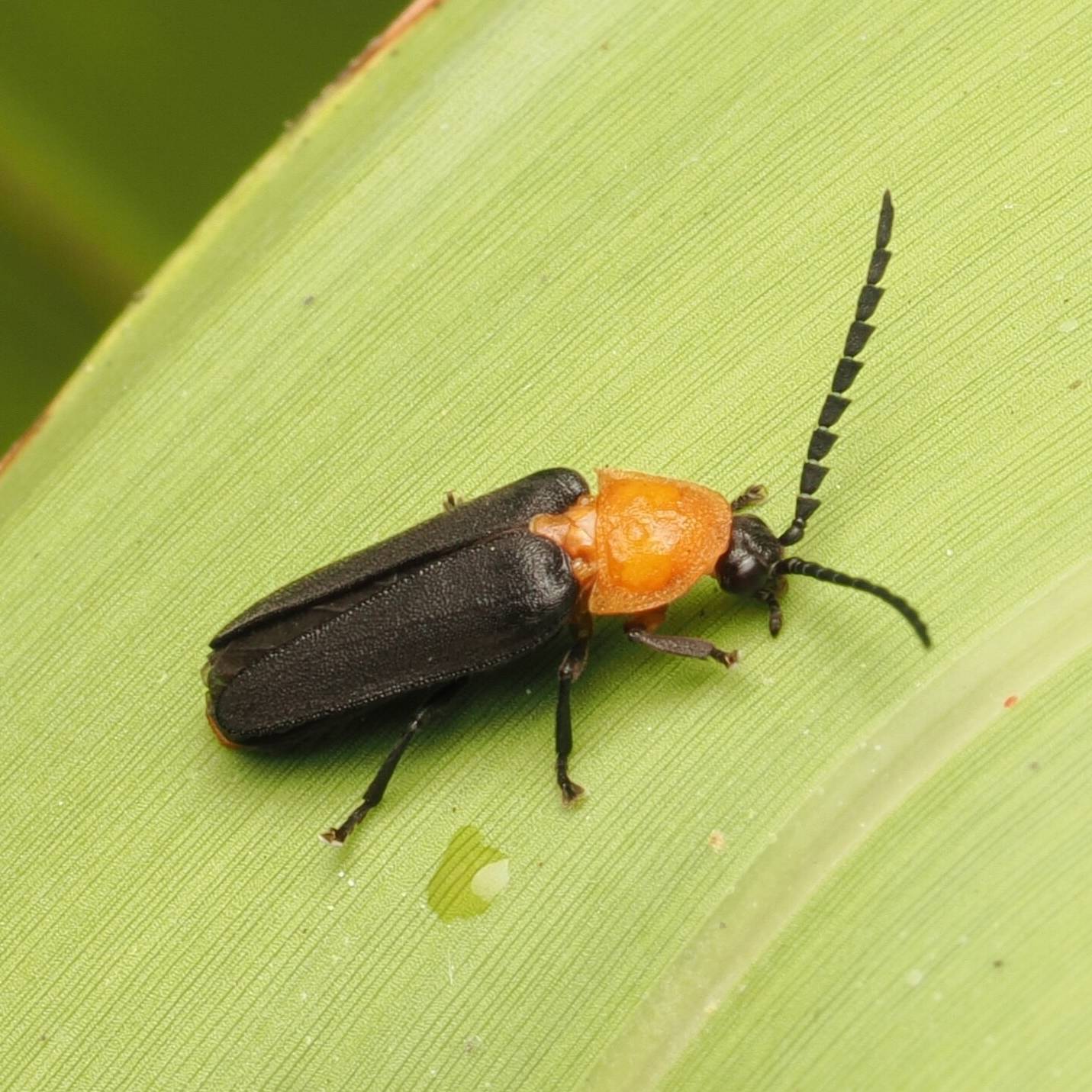
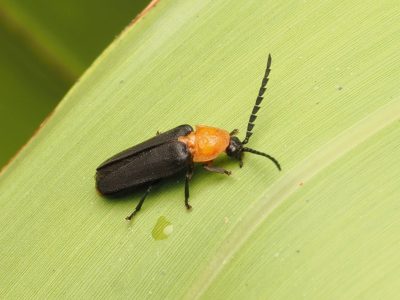
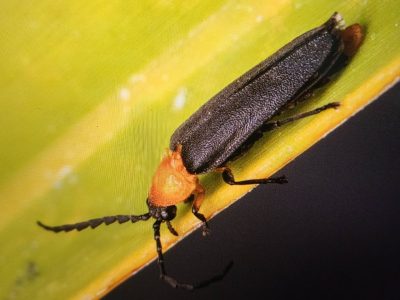
Florida scrub dark firefly
Scientific Name
Lucidota luteicollis
Recent Synonyms
None
Adult Male Size
8 mm
Diet
Unknown
Firefly Atlas Category
Focal species
The Florida scrub dark firefly is endemic to Florida, where it occurs on dry ridges in scrub, sandhill, and pine savannah habitats. Adults are diurnal (active during the day). Females are subterranean, flightless, and very cryptic, and little is known about the species’ population size, trends, or abundance.
Conservation
Reason(s) For Firefly Atlas Focal Species Designation
Reliably identifiable, Suspected population loss
Status
IUCN Red List
The International Union for Conservation of Nature (IUCN) Red List of Threatened Species is an inventory of the global conservation status and extinction risk of biological species, maintained collectively by scientists worldwide.Vulnerable (VU)
NatureServe
The NatureServe conservation status ranks use a standardized methodology to assess the extinction risk of species, with a focus on the US and Canada. State wildlife agencies and natural heritage programs use these ranks to prioritize species for conservation actions.Globally critically imperiled or imperiled (G1G2) Imperiled or vulnerable in Florida (S2S3)
Species of Greatest Conservation Need Lists
Species of Greatest Conservation Need (SGCN) are lists of species included in State Wildlife Action Plans, identifying animals and plants that need the most conservation attention and resources at the state and region level.None
US Endangered Species Act
The Endangered Species Act is a United States law that provides legal protections to species that are officially listed as endangered or threatened by the US Fish and Wildlife Service.N/A
Threats
Threats to this species include habitat loss and degradation, climate change and associated drought, and trampling of flightless adult females.
Location
Distribution
USA
Florida
Details
This species is endemic to Florida. It occurs primarily in upland ridge habitats in the central part of the state, from Archbold Biological Research Station in Highlands County north to areas around Gainesville in Clay County.
Habitat
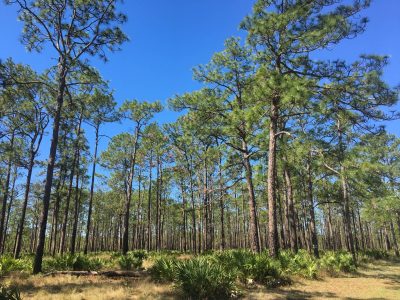
The Florida scrub dark firefly is a habitat specialist associated with very dry habitats in Florida’s scrub, sandhill, and longleaf pine savannah habitats. It appears to be confined to upland ridges.
Behavior
Activity Period
Adults are known to be active from March through September, with an early season peak in April.
Flash Pattern
This species does not flash. Flightless adult females, which are subterranean, likely attract males by releasing pheromones. Females may avoid coming aboveground even to mate; opting instead to mate with males through the sand.
Sources
Fallon, C. & Cicero, J. 2021. Lucidota luteicollis. The IUCN Red List of Threatened Species 2021: e.T164015739A166771333. https://dx.doi.org/10.2305/IUCN.UK.2021-1.RLTS.T164015739A166771333.en. Accessed on 08 September 2025.
Fallon, C. & Cicero, J. 2021. Lucidota luteicollis: Florida Scrub Dark Firefly. NatureServe Explorer. https://explorer.natureserve.org/Taxon/ELEMENT_GLOBAL.2.1215333/Lucidota_luteicollis. Accessed on 08 September 2025.
Florida State Collection of Arthropods (FSCA). 2022. Data export from Oliver Keller to Richard Joyce.