Fall is making itself known in many parts of the country—shorter days, cooler nights, and leaves tinged crimson and gold. These same leaves will begin tumbling earthward in the coming weeks, carpeting our yards, parks, and walkways with nature’s crinkliest confetti.
What is leaf litter?
Leaf litter is the layer of organic matter—including fallen twigs, leaves, bark, and conifer needles—that accumulates on top of the soil. Far from being a dead zone, leaf litter is a vibrant yet often overlooked ecosystem rich with life. Decomposers such as millipedes, earthworms, fungi, and bacteria feed on leaf litter, helping to break it down and release nutrients back into the soil. This decay feeds life, creating a slow-release natural fertilizer that improves soil structure, feeds the root systems of plants, and fuels new growth in the spring. The benefits don’t stop there—leaf litter also acts as a blanket to regulate soil temperature, locks in moisture, slows weed growth, and provides shelter for an eclectic array of soil organisms, from springtails and salamanders to bumble bee queens, immature butterflies and moths, and—you guessed it—fireflies.

(Photo by Candace Fallon)
Which fireflies use leaf litter?
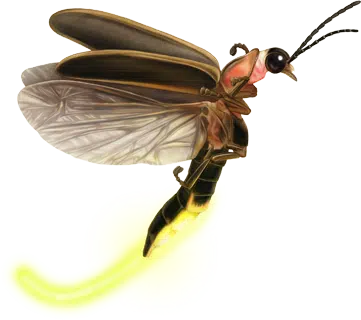
While not all fireflies use leaf litter directly, they can certainly benefit from some of the perks mentioned above. Photinus fireflies, for example, live in the organic layers of soil, below the leaf litter. But some species, including those in the Pyractomena, Photuris, Pleotomus, Lucidota, and Microphotus genera, specifically travel in the leaf litter zone, seeking shelter, moisture, and food.


Firefly larvae of many different genera can be found in the leaf litter. Clockwise from top left: Micronaspis floridana larva in FL (photo by Richard Joyce/Xerces Society); Pyractomena larva eating a snail in AL (photo by RockyRollin, iNaturalist, CC BY-NC); Photuris larva from Dwelly Firefly Sanctuary, MA (photo by Richard Joyce/Xerces Society); and Pyractomena larva in Rock Creek Park, Washington, DC (photo by Katja Schulz, Flicker, CC).
How do fallen leaves benefit fireflies?
Food for their prey Firefly larvae don’t eat leaves—but their prey does! The snails, slugs, earthworms, and other creatures that firefly larvae consume are largely detritivores, eating decomposing plant matter and the fungi and algae that grows on this matter.
A buffer against extreme temperatures Leaves act as an insulating blanket, making conditions warmer in winter and cooler in summer.
More moisture Fireflies and their prey dry out easily, and fallen leaves act as a sponge, soaking up moisture and keeping the soil damp.
Physical shelter Leaves offer places to hide from predators, desiccating winds, and harsh sunlight.

(Photo by Ted Weber, iNaturalist, CC BY-NC)
What to do with your leaves instead of removing them
In undisturbed environments, the cycle of decay feeding new life is a closed loop. But when we interfere with our compost bags and mower blades, we break the cycle, removing critical nutrients, desiccating the soil surface, and harming, killing, or removing overwintering insects. Leaving the leaves doesn’t have to mean ignoring them—you can move them away from walkways, lawns, and gathering places to other areas of your yard and garden. Consider the following firefly-friendly practices:
- Use leaf litter as a winter mulch for garden or flower beds
- Place leaves in rings around the bases of established trees
- Leave small piles in out-of-the-way places
- Cap leaf litter depth to just a few inches so it can easily break down
- Let your neighbors know why you’re leaving the leaves, and maybe they’ll decide to do the same.

Additional reading
- Leave the Leaves! Additional resources from the Xerces Society.
- Searching for fall’s hidden treasures. Learn more about looking for firefly larvae this fall.