
Common Name
Crazy Horse firefly
Scientific Name
Photuris tasunkowitcoi
Recent Synonyms
None
Adult Male Size
13-14 mm
Diet
Unknown
Firefly Atlas Category
Lost species
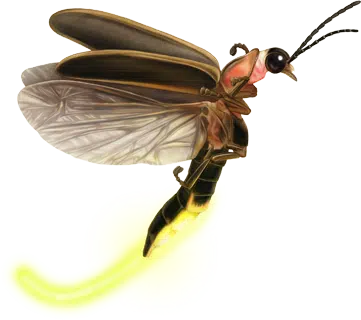
The Crazy Horse firefly is known from a single location along the Pembina River in North Dakota. It has only been observed once, in 1991, and it's unclear if the population remains extant or if other populations exist.
Conservation
Status
IUCN Red List
The International Union for Conservation of Nature (IUCN) Red List of Threatened Species is an inventory of the global conservation status and extinction risk of biological species, maintained collectively by scientists worldwide.Not Evaluated (NE)
NatureServe
The NatureServe conservation status ranks use a standardized methodology to assess the extinction risk of species, with a focus on the US and Canada. State wildlife agencies and natural heritage programs use these ranks to prioritize species for conservation actions.None
Species of Greatest Conservation Need Lists
Species of Greatest Conservation Need (SGCN) are lists of species included in State Wildlife Action Plans, identifying animals and plants that need the most conservation attention and resources at the state and region level.None
US Endangered Species Act
The Endangered Species Act is a United States law that provides legal protections to species that are officially listed as endangered or threatened by the US Fish and Wildlife Service.N/A
Threats
Specific threats to this species are unknown. It has not been reported since 1991.
Location
Distribution
USA
North Dakota
Details
This firefly is known from just a single site in Pembina County, North Dakota. In his 2018 manuscript in which he describes the species, Dr. James Lloyd notes he saw males flying “upslope from a bridge across the Pembina River near Walhalla.”
Habitat
Riparian area with herbaceous, shrubby, and tree-lined banks, and an adjacent field.
Behavior
Activity Period
This firefly has only been observed in June, but it is likely it is also active in July, similar to other Photuris species.
Flash Pattern
Adult males emit a short flash, similar in duration to early short flashes of other Photuris, earlier in the evening; later in the evening, they appear to switch to long flashes (at least a second in duration at about 70 degrees F) of varying intensity.
Sources
Lloyd, J. E. 2018. A naturalist’s long walk among shadows: of North American Photuris – patterns, outlines, silhouettes… echoes. Self-published, Gainesville, FL, USA. 477 pp.