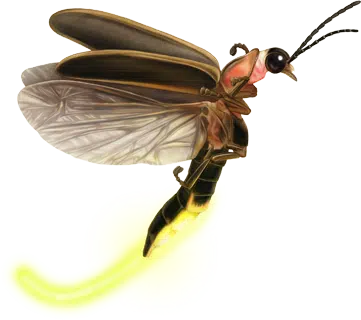
Observation: Unknown
Primary Observer:
Ellie Shultz
Event Date:
2026-09-29
Status:
Unreviewed
Survey
Site Name:
O'Leno State Park Pine Flatwoods into Hammock behind cabins
Province/State:
Florida
Event Date:
2026-09-29
Time of Day:
Night-Time
Start Time:
20:40
End Time:
21:20
Number of Observers:
3
Primary Observer:
Ellie Shultz
Additional Observers:
Ashley Francis, Analisa Roy
target_species_genus:
unknown
target_species_species:
unknown
Location and Habitat
Location Accuracy (meters):
50-100
Habitat Type:
Woodland/Forest - Trees dominant, and in the over-story
Habitat Type Notes:
We hiked beyond Cabin 11 through the pine flatwoods and started to see fireflies as it transitioned into a hardwood hammock, which had lots of very tall magnolias and other trees, maybe oaks. Habitats appeared to be managed naturally, and the flatwoods is likely burned every 3 years. There were more fireflies deeper into the hammock, where there was less light from the night sky. We did not go too far into the hammock, however.
Elevation (meters):
21
Area Searched (hectares):
.5
Artificial Light Sources
Vehicles: No
Street Lights: No
Buildings: No
Artificial Light Types
Sky Glow (diffuse illumination in the sky): No
Light Trespass (light cast on surfaces beyond its intended target): No
Glare (bright light causing visual discomfort): No
Artificial Light Notes:
Observation
Observation Type:
Without Flash Data
Number Observed:
11-50
genus:
unknown
Species:
unknown
Observation Notes:
While we didn't manage to catch any fireflies (they were either too deep in the vegetation or too high), we saw at least 2 flash patterns, with a possible third.
***
The first flash pattern we saw was the double flash that we saw on all 3 nights of surveys. (It was photographed on 2 other nights, and I believe it is Photinus consanguineus, Photinus greeni, or Photinus macdermotti.) I believe we saw a few dozen of these.
***
We saw just a few fireflies that had the same rapid pulsing pattern we also saw by the river. They had an extremely rapid flash with maybe 20+ pulses. To our eyes, they appeared to start bright and then get dimmer. Or perhaps they got brighter briefly before dimming. My best guess is Photuris lamarcki, as I believe there were too many pulses to be P. harrannorum or P. whistlerae.
***
We also observed the following behavior a few times: the first of the double-flasher's flashes appeared to be be answered almost simultaneously by another flash just a few feet away. Unsure if it was just a coincidence, a nearby competing male, or perhaps a femme fetale of the above Photuris, whose females were reported as hawkers by Jim Lloyd.
Specimen Voucher Number:
Flash Behavior
First Flash Time:
Last Flash Time:
First Flash Temp (F):
Last Flash Temp (F):
Flashes in Pattern:
Flash Color:
Flash Pattern Period:
Flash Duration:
Flash Interval:
Male Height Zone:
Flash Location:
Male Flash Behavior:
Female Flash Behavior:
Status Changes
| DATE | USER | STATUS |
|---|---|---|
| 2026-10-05 01:31:10 | Ellie Shultz | ->unreviewed |