Observation: Unknown
Primary Observer:
Ellie Shultz
Event Date:
2026-09-29
Status:
Unverified
Survey
Site Name:
O'Leno State Park River Bridge
Province/State:
Florida
Event Date:
2026-09-29
Time of Day:
Night-Time
Start Time:
19:45
End Time:
20:25
Number of Observers:
4
Primary Observer:
Ellie Shultz
Additional Observers:
Ashley Francis, Analisa Roy, Ethan Levine
target_species_genus:
unknown
target_species_species:
unknown
Location and Habitat
Location Accuracy (meters):
25-50
Habitat Type:
Riparian - Areas Along lake or stream
Habitat Type Notes:
We made our observations from the bridge that connected the more developed area of the state park (buildings, parking lots, and mowed grass) with the hardwood hammock on the other side of the river.
Elevation (meters):
18
Area Searched (hectares):
.5
Artificial Light Sources
Vehicles: No
Street Lights: Yes
Buildings: Yes
Artificial Light Types
Sky Glow (diffuse illumination in the sky): No
Light Trespass (light cast on surfaces beyond its intended target): Yes
Glare (bright light causing visual discomfort): Yes
Artificial Light Notes:
We were in view of the dining hall building, cabins, and lights from the parking lot. At times, we thought we saw fireflies, and they ended up just being lights shining through the trees from these structures.
Observation
Observation Type:
Without Flash Data
Number Observed:
2-10
genus:
unknown
Species:
unknown
Observation Notes:
Having heard that someone saw fireflies here the night before, we stood on the bridge and observed until we started to see some fireflies.
***
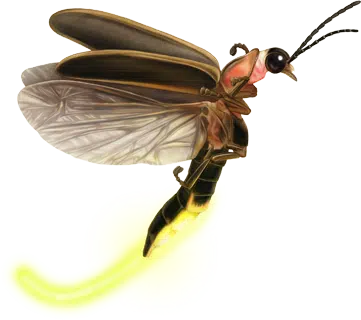
We saw a small handful of fireflies that had a single flash, 3 seconds apart. These fireflies were flying near/over the river, and we only saw them between 8-8:20. A few possibilities, based on only flash pattern and location/habitat:
1. I initially thought Photinus collustrans, but in playing back the flash pattern, the flashes exactly 3 seconds apart don't match P. collustrans' flash.
2. Perhaps Photinus floridanus; though they are not on the checklist of active fireflies for this time of year, Lynn Faust's book states "they have been collected in almost every month."
3. Photinus umbratus is listed as a dusk single flasher in Florida, though I couldn't find info on its specific flash pattern.
4. Photuris douglasae is almost always an option since its pattern is variable, and we were in a wetland habitat.
***
We also saw a few fireflies in that time frame that had an extremely rapid flash with maybe 20+ pulses. To our eyes, they appeared to start bright and then get dimmer. Or perhaps they got brighter briefly before dimming. My best guess is Photuris lamarcki, as I believe there were too many pulses to be P. harrannorum or P. whistlerae.
Specimen Voucher Number:
Flash Behavior
First Flash Time:
Last Flash Time:
First Flash Temp (F):
Last Flash Temp (F):
Flashes in Pattern:
Flash Color:
Flash Pattern Period:
Flash Duration:
Flash Interval:
Male Height Zone:
Flash Location:
Male Flash Behavior:
Female Flash Behavior:
Status Changes
| DATE | USER | STATUS |
|---|---|---|
| 2026-10-04 21:05:44 | Ellie Shultz | ->unreviewed |
| 2026-10-08 16:18:42 | Richard Joyce | unreviewed->unverified |
1 thought on “Observation: Unknown”
Leave a Comment
You must be logged in to post a comment.



This is an intriguing one! Given that the flashes were 40 min to an hour after sunset, I suspect that they were not from any of the Photinus species you mention and agree that a Photuris is most likely.