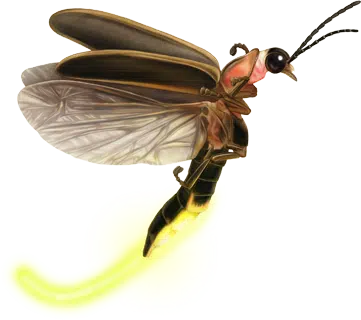
Observation: Photinus granulatus
Primary Observer:
Emily Geest
Event Date:
2026-07-18
Status:
Unverified


Survey
Site Name:
Lake Eufaula, Hummingbird Beach
Province/State:
Oklahoma
Event Date:
2026-07-18
Time of Day:
Night-Time
Start Time:
20:15
End Time:
22:05
Number of Observers:
10
Primary Observer:
Emily Geest
Additional Observers:
April Allen, Reuben, Underwood family, and others
target_species_genus:
photinus
target_species_species:
pyralis
Location and Habitat
Location Accuracy (meters):
0-25
Habitat Type:
Riparian - Areas Along lake or stream
Habitat Type Notes:
A meadow/prairie that meets Lake Eufaula edge, bordered by woody habitat (edge of the cross timbers ecoregion).
Elevation (meters):
176
Area Searched (hectares):
2.88
Artificial Light Sources
Vehicles: Yes
Street Lights: No
Buildings: Yes
Artificial Light Types
Sky Glow (diffuse illumination in the sky): Yes
Light Trespass (light cast on surfaces beyond its intended target): No
Glare (bright light causing visual discomfort): Yes
Artificial Light Notes:
Between a 4 and 5 on Bortle dark-sky scale
Observation
Observation Type:
With Flash Data
Number Observed:
2-10
genus:
photinus
Species:
granulatus
Observation Notes:
A total of 13 seen! Smallest fireflies I've seen, I tried to get their squirmy selves to sit on the ruler as you can see in the photos, but they fought me.
Also, I have no idea if this is P. dimissus it was just the best guess I had with the flash pattern and tiny size.
Specimen Voucher Number:
Flash Behavior
First Flash Time:
21:18
Last Flash Time:
22:00
First Flash Temp (F):
88
Last Flash Temp (F):
88
Flashes in Pattern:
1
Flash Color:
Yellow
Flash Pattern Period:
2
Flash Duration:
1
Flash Interval:
1
Male Height Zone:
Low (0-3 ft), Moderate (3-8 ft)
Flash Location:
Started low in the field and shifted up a bit as the night went on.
Male Flash Behavior:
1 sec flash, 1 sec off, 1 sec flash, 1 sec off and repeat.
However, I had one in the ziplock and after sitting for a bit it had a rapid two flash (still within a sec), one sec off. It only did it very briefly and then stopped flashing until it was released.
Female Flash Behavior:
None seen
Status Changes
| DATE | USER | STATUS |
|---|---|---|
| 2026-07-20 17:09:46 | EMILY GEEST | ->unreviewed |
| 2026-08-18 14:09:05 | Richard Joyce | unreviewed->unverified |
1 thought on “Observation: Photinus granulatus”
Leave a Comment
You must be logged in to post a comment.



Thanks for submitting this observation, Emily! This is a neat find!
Based on the small size (~6 mm?); narrow form; pointed, tapering elytra that don’t reach the tip of the abdomen; dark, truncated pygidium; dark ventrites (other than the lanterns); and the single-pulse flash pattern, I do think that this firefly matches Photinus dimissus pretty well.
However, Photinus granulatus is very similar in both appearance and flash pattern, and both species are known to occur in Oklahoma. Based on Green’s Photinus key, the way to tell them apart is that the pronotum of Photinus granulatus has a grainy, “sandy” texture to the surface, while Photinus dimissus does not. I unfortunately can’t discern the texture of the pronotum from the photos.
A few notes about the flash pattern–
At the temperature of your observation (88 deg F), both P. dimissus and P. granulatus would be expected to have a shorter flash pattern period than the 2 seconds you observed. Ben Pfeiffer and Jim Lloyd describe a 0.8-1 second flash pattern period for P. dimissus at 74 deg F (https://www.firefly.org/field-guides/texas-fireflies) and Larry Buschman describes a ~1-second flash pattern period for P. granulatus (https://entomology.k-state.edu/doc/WesternFireflies%20March%202016a.pdf).
Also, a 1-second flash duration is actually pretty long for a firefly flash, and will appear almost like a glow rather than a flash or blink. Both P. dimissus and P. granulatus are described as having quick flashes (Lloyd 166 states ~0.2 seconds for P. granulatus).
I will send this observation to Ben Pfeiffer for him to take a look, and am leaving the observation status as “unverified” for the moment.