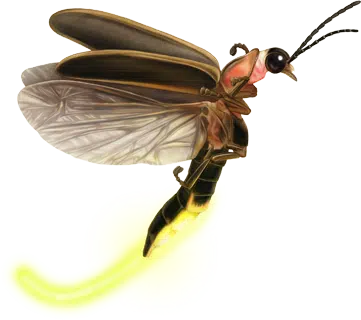
Observation: Photuris chenangoa
Primary Observer:
Cai
Event Date:
2026-06-27
Status:
Unverified


Survey
Site Name:
GLSP water treatment building
Province/State:
New York
Event Date:
2026-06-27
Time of Day:
Night-Time
Start Time:
21:50
End Time:
22:20
Number of Observers:
1
Primary Observer:
Cai
Additional Observers:
NA
target_species_genus:
unknown
target_species_species:
unknown
Location and Habitat
Location Accuracy (meters):
0-25
Habitat Type:
Woodland/Forest - Trees dominant, and in the over-story
Habitat Type Notes:
primarily hemlock
Elevation (meters):
453.31
Area Searched (hectares):
.25
Artificial Light Sources
Vehicles: No
Street Lights: Yes
Buildings: Yes
Artificial Light Types
Sky Glow (diffuse illumination in the sky): No
Light Trespass (light cast on surfaces beyond its intended target): Yes
Glare (bright light causing visual discomfort): No
Artificial Light Notes:
Moon was SO bright; however, the clearing I was in was shaded by the trees.
Observation
Observation Type:
With Flash Data
Number Observed:
2-10
genus:
photuris
Species:
chenangoa
Observation Notes:
15mm. very aware, would stop flashing if you got near. ignored two potential females that were flashing at the males in the area.
Potentially Photuris Fairchildi, however, from what I read online, the flash pattern I observed doesn't match Fairchildi. This could be a skill issue... after some advice, I filtered through some of the ID tools, and I am updating my guess to Photuris chenangoa. flash pattern, appearance, and ecoregions all match
Specimen Voucher Number:
Flash Behavior
First Flash Time:
21:50
Last Flash Time:
22:20
First Flash Temp (F):
72
Last Flash Temp (F):
71
Flashes in Pattern:
1
Flash Color:
Yellow
Flash Pattern Period:
2
Flash Duration:
.5
Flash Interval:
1.5
Male Height Zone:
Moderate (3-8 ft)
Flash Location:
Flashes were mostly in the grassy area, stopping around the tree line.
Male Flash Behavior:
Steady, slow blink and continuous, like a satellite. Moved in a wispy line. Would flash continuously, either too many and I lost count/ I would lose track/ they would enter the woods/ or I would get too close and they would stop flashing. When captured, they had an erratic and fast flash pattern I couldn't notate.
Female Flash Behavior:
Two potential females who would flash with a 1-second-long flash seemingly within the first 3 flashes of a male. However, the males never came in.
Status Changes
| DATE | USER | STATUS |
|---|---|---|
| 2026-06-28 16:54:25 | Grafton Staff | ->unreviewed |
| 2026-07-10 16:46:34 | Richard Joyce | unreviewed->unverified |
2 thoughts on “Observation: Photuris chenangoa”
Leave a Comment
You must be logged in to post a comment.



Thank you for this firefly data submission, and welcome to the challenge and frustration of figuring out Photuris species! Even seasoned firefly researchers often land at the ID of “Photuris not-surish” (credit goes to a group of firefly surveyors in Texas for that label:https://www.thevindicator.com/article/1005,lighting-up-the-night-sky).
You did a nice job of documenting this firefly and its flash pattern, and I’m glad that you found the filterable ID tool for Photuris.
Photuris chenangoa is a reasonable tentative ID, based on the single flash pattern, location, and dark hind coxae. That said, the flash pattern period of 2 seconds at 72 degrees F seems a bit long/slow compared with what is described in Lloyd 2018: “emits trains of simple short flashes at or near 0.83 sec intervals (1.2 Hz) @21°C [69.8 deg F].” The P. chenangoa specimens Lloyd looked at were also a little bit smaller than yours (max 14 mm vs your 15 mm), but its a small difference and I’m not sure how much weight to place on it.
Photuris margotoolae is another Photuris that matches reasonably well, though its flash pattern period (about 4 seconds at 70 deg F) is longer/slower than what you saw.
Given the unresolved taxonomic state of many Photuris populations, I like to focus on thorough documentation rather than definitive ID, though we do try to find the closest matches among described species.
Thank you for the great feedback. As this is our first year with the surveys, we are using this time to learn what we have in the area and what to look for. This species is definitely one we will try to focus on more in the future. I wish we had time to do more surveys; maybe next year we can.