Observation: Photuris
Primary Observer:
Allen Knutson
Event Date:
2024-06-12
Status:
Unverified


Survey
Site Name:
Clymer Meadow Preserve TNC
Province/State:
Texas
Event Date:
2024-06-12
Time of Day:
Night-Time
Start Time:
20:30
End Time:
21:50
Number of Observers:
1
Primary Observer:
Allen Knutson
Additional Observers:
none
target_species_genus:
unknown
target_species_species:
unknown
Location and Habitat
Location Accuracy (meters):
250-500
Habitat Type:
Grassland/Meadow - Meadow, open, grasses dominant
Habitat Type Notes:
open grassland dominated by Johnsongrass 3-4 ft tall. Dense woods, hackberry common, Deep, dry gully follows wooded area along survey area.
Elevation (meters):
198
Area Searched (hectares):
1 hectare
Artificial Light Sources
Vehicles: No
Street Lights: No
Buildings: No
Street Lights: No
Buildings: No
Artificial Light Types
Sky Glow (diffuse illumination in the sky): No
Light Trespass (light cast on surfaces beyond its intended target): No
Glare (bright light causing visual discomfort): No
Light Trespass (light cast on surfaces beyond its intended target): No
Glare (bright light causing visual discomfort): No
Artificial Light Notes:
 
Observation
Observation Type:
With Flash Data
Number Observed:
11-50
genus:
photuris
Species:
unknown
Observation Notes:
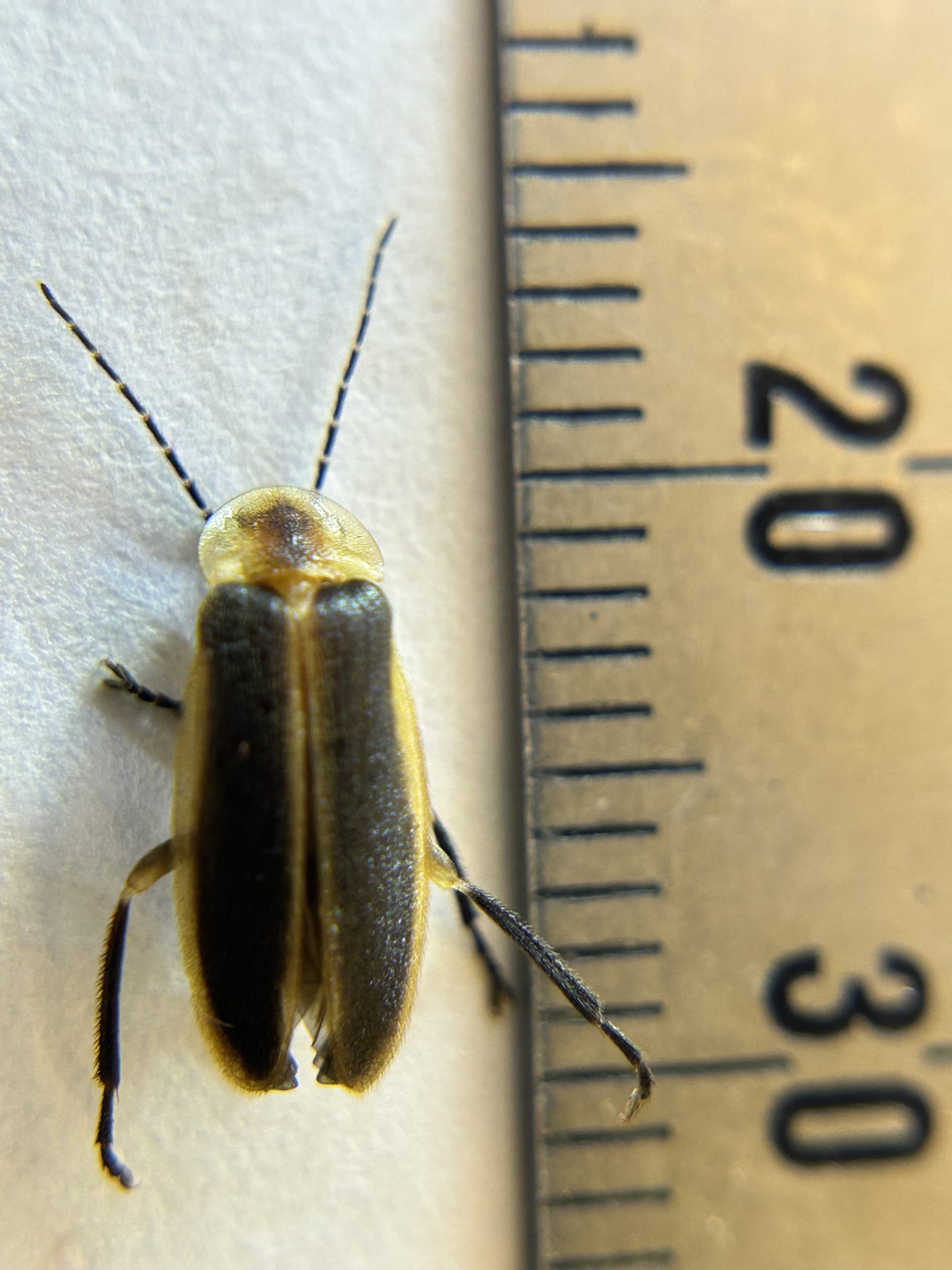
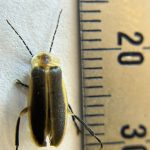
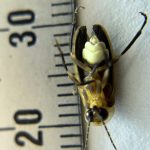
10 mm in length. Long legs, humpbacked appearance suggests Photuris. (page 5, Faust). The pronotum is colorless with a brown, box-like pattern in center and the males did not flash angrily when captured which are characteristic of Photuris frontalis and P. congener (Faust p. 183). P. congener has not been reported in TX while P. frontalis has been reported from northeast TX (Caddo Lake, see BugGuide). The males I observed were flying slowly through woods, about 3-5 ft above ground, flashing a white light, which is consistent with P. frontalis (page 207, Faust). However, the flash interval, time between flashes, was clearly 3 seconds at 88 F as recorded using the voice memo option on my phone. This is in contrast to the much shorter flash interval of 0.76 sec reported by Faust. Also, Faust (p. 207) states there are two stigmatiform pits on the top lantern which are lacking (or extremely faint) in my specimens.
Specimen Voucher Number:
AEK5, AEK6
Flash Behavior
First Flash Time:
21:05
Last Flash Time:
21:50
First Flash Temp (F):
89
Last Flash Temp (F):
88
Flashes in Pattern:
4
Flash Color:
White
Flash Pattern Period:
.
Flash Duration:
.
Flash Interval:
3
Male Height Zone:
Moderate (3-8 ft)
Flash Location:
dense woods
Male Flash Behavior:
relatively slow, horizontal flight.
Female Flash Behavior:
.
1 thought on “Observation: Photuris”
Leave a Comment
You must be logged in to post a comment.


A very belated thank you for this observation, Allen!
I am intrigued by this observation, and while I do see some similarities with Photuris frontalis, the longer flash pattern period and the lack of stigmatiform pits make me reluctant assign P. frontalis as the ID.
The photos and flash pattern remind me of Photuris polacekae which has a bare-bones description based off a single Gillispie County specimen in Lloyd’s 2018 Photuris monograph:https://entnemdept.ufl.edu/Lloyd/Firefly/Lloyd_2018.pdf.
Clearly, Photuris in Texas need more study!